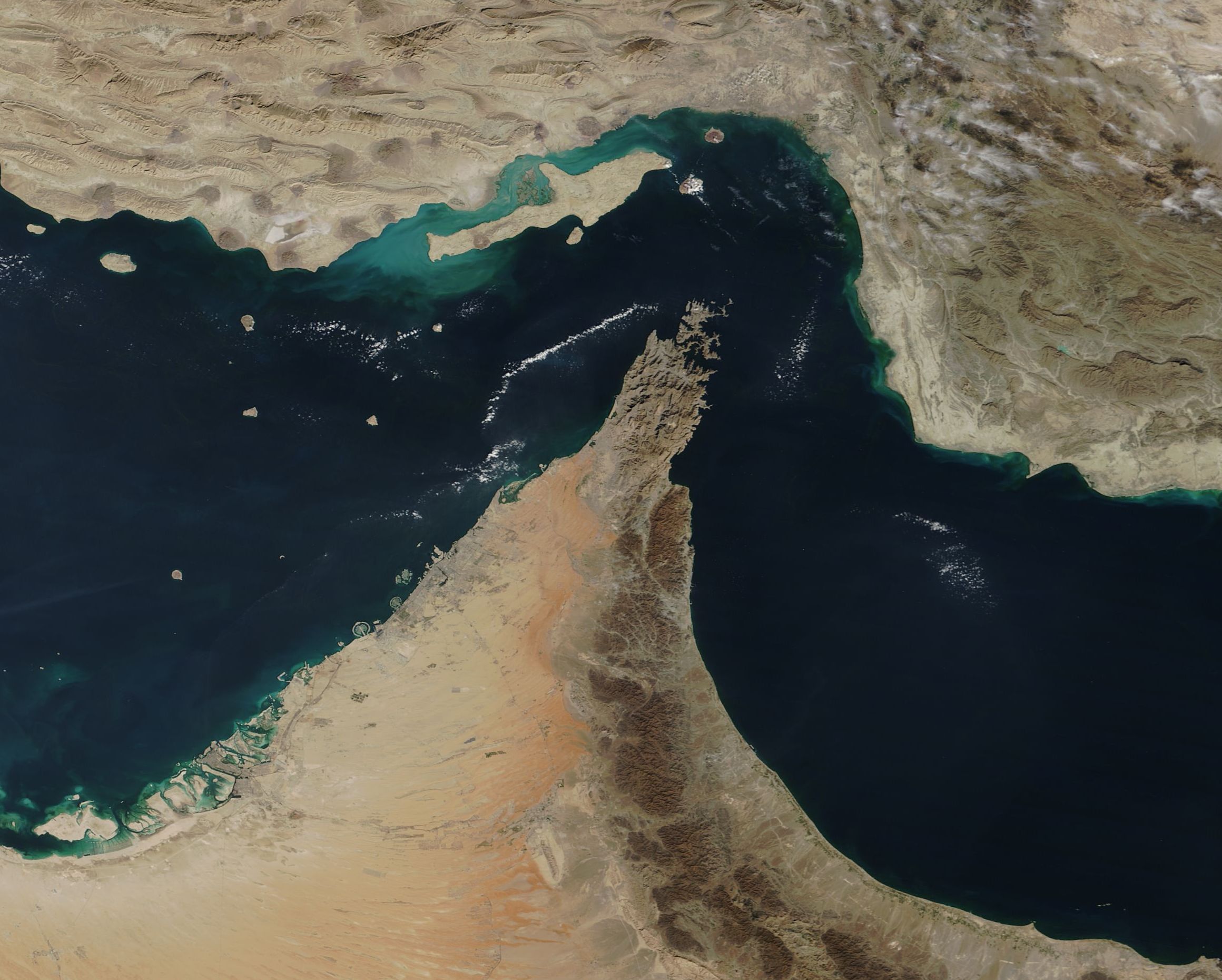
The United States and Iran reached an agreement on Sunday to end nearly four months of war, with a formal signing ceremony promised for Friday in Switzerland — where the Iranian foreign minister and the country’s lead negotiator are to meet Vice President Vance, the first encounter of its kind since Washington and Tehran severed relations after the 1979 embassy seizure. President Trump authorized the lifting of the US naval blockade of Iranian ports; Iran is to reopen the Strait of Hormuz, toll-free. Pakistan, the lead mediator, announced that both sides had declared the immediate and permanent termination of military operations on all fronts — Lebanon included. Markets exhaled: Brent fell roughly four percent, US crude nearly five. Vice President Vance called it the possible dawn of a “new era.” Iran’s embassy in Türkiye used the identical phrase. So did, in effect, everyone.
The instinct to celebrate is understandable. It is also worth resisting. Measured against the war’s own declared purposes, the United States achieved remarkably little — and the language of “return to normal” is too generous to Washington’s position. On the dimension that mattered most, this looks less like a return to the status quo ante than a step backward from it.
What we know of the terms comes, for now, largely from Tehran. A fourteen-point draft published by Iranian media and walked through by an adviser to Iran’s negotiating team — text that neither government has officially confirmed — naturally reads as an Iranian triumph and should be discounted accordingly. But even with the triumphalism stripped out, and even where the Iranian account merely matches the cautious American descriptions, the document points one way: the concessions on paper run heavily in Tehran’s favor.
The war’s own aims, unmet
The campaign opened on February 28 with strikes intended to cripple three things: Iran’s nuclear program, its missile capability, and its network of regional proxies. By the wire services’ own accounting, Tehran exits the war with all three intact. The missile program survives. Support for Hezbollah, the Houthis, and Hamas survives. And Iran retains its stockpile of roughly 440 kilograms of uranium enriched to 60 percent — a short, technical step from weapons grade, by the IAEA’s own characterization. More tellingly, the missiles and the proxies do not appear even as topics for the sixty days of negotiations to come. The two threats Israel went to war to end are not on the agenda.
The nuclear question, the ostensible reason for the whole enterprise, is not resolved either. It is deferred into a sixty-day window that has not yet opened, on terms not yet signed. And by the Iranian account, even a final deal would bind Tehran to remarkably little: a pledge not to build a weapon — which Iran already made by ratifying the Nonproliferation Treaty in 1970 and restated on the first page of the 2015 accord Trump tore up — and a promise to “resolve” the 60-percent stockpile through dilution, a reversible step that keeps the material inside the country and recoverable to higher enrichment within a short period. When the casus belli is the precise thing you punt to a future round of talks, and the future concession is itself reversible, you have not achieved your war aim. You have postponed it — at the cost of thousands of dead.
There is a fourth aim, and it fares worst of all. Netanyahu opened the war vowing to “remove the existential threats,” which he defined as destroying the nuclear and missile programs and creating the conditions for Iranians to topple their government. The emerging text reportedly does the opposite: it has the two states pledge to respect each other’s sovereignty and refrain from interfering in each other’s internal affairs. If signed, the United States will have put its name to a promise not to pursue the very regime collapse the strikes were meant to provoke.
Worse than “before”
Here is where the comforting phrase “return to how things were” understates the damage. Iran leaves this war holding a lever it did not previously possess as demonstrated, usable leverage: it has shown both the willingness and the capacity to throttle the Strait of Hormuz, absorb the consequences — including a decapitation strike that killed Ayatollah Khamenei — and survive as a regime. Before the war, closing Hormuz was a theoretical Iranian threat. After it, it is a proven instrument, and Tehran is already signaling it will use it: its negotiators say that if Washington fails to deliver, the strait stays shut, the talks stop, and “if necessary, we will enter a war.”
And the deal effectively pays Iran to set that instrument down — for a price that, as it emerges, is steep. Iranian outlets put the release of frozen assets at some $24 billion across the sixty days, with half of it, around $12 billion, handed over before Iran concedes anything at the table. The draft reportedly floats a $300 billion “reconstruction” fund that Tehran openly reads as war-damage compensation. Washington is said to have committed, in a final deal, to lifting not only secondary but primary sanctions — something it withheld even in 2015. And within thirty days of signing, American forces are to withdraw from positions ringing Iran, a concession Iran’s negotiators call “beyond price” and one no prior US administration has offered. Strip away half of this as Tehran talking up its own hand, and what remains is still a balance sheet tilted one way.
Iran also secured the inclusion of Lebanon in the ceasefire — a concession Israel had explicitly wanted excluded, since it suspends Israel’s campaign against Hezbollah on Iran’s terms rather than Israel’s. So Tehran walks away with leverage gained and a concession extracted over its adversary’s objection. That is not a restoration of the prior board. It is a board on which one player has materially improved his position.
Read the scoreboard your enemies keep
It is instructive to notice who is calling this a defeat. In Israel the verdict is nearly unanimous and crosses the political spectrum. A leading daily reduced it to two words on its front page: “Bad Deal.” Avigdor Liberman, a former defense minister, called it a catastrophe; Yair Lapid, the centrist opposition leader, called it among the most shocking failures in the history of Israeli security policy. The complaint is specific and damning: the missiles and the proxies are absent from the agenda, the uranium stockpile is handled on what looks like Iranian goodwill, and money is about to flow back into the treasury of a government Israel had hoped to see collapse. Netanyahu, who launched two wars on Iran inside a single year, is left outside the peace entirely — reduced to a statement promising only that Iran would not get a nuclear weapon, conspicuously silent on missiles and proxies.
Tehran, for its part, frames the agreement as having forced Washington to sign on Israel’s behalf — to guarantee Israeli conduct rather than leaving Israel, as in every prior arrangement, free to act outside any deal the United States put its name to. Whether or not that survives into the final text, it is precisely the structure Israelis fear, and it explains the rupture now on open display.
The choreography between the supposed victors confirms the reading. Trump called the Israeli strike on Beirut a blunder an hour before signing, overrode Netanyahu, and — speaking on his eightieth birthday — called the Israeli prime minister “a very difficult guy” who ought to be thankful to Washington, since without the deal “Israel wouldn’t be around for two hours.” That is not how a patron speaks of a client to whom it has just delivered a victory. It is how a broker speaks of an ally it had to restrain to close the deal. When your principal adversary and your closest ally’s own leadership independently arrive at the same scorecard, that convergence is information, not noise.
What Washington can actually bank
The American gains are real but belong to a different ledger — and most of them are recoveries from costs the war itself created. Domestically: an exit from an unpopular war ahead of the midterms, falling oil, gasoline prices recast as a victory. These are not trivial, and they may be the whole of what the administration actually wanted.
But the diplomatic trophies dissolve on contact with the text. The headline prize — a “permanently toll-free” Strait of Hormuz — is a return to a status that already existed: Iran never charged tolls before the war, the memorandum suspends them for only sixty days before promising a regional “dialogue,” and Iran’s negotiators are already asserting that the right to levy “service fees” on shipping belongs to Tehran and Muscat alone and survives any agreement. A veteran chronicler of the Iranian nuclear file put the point plainly: the president is essentially celebrating a return to the prewar status quo. The nonproliferation guarantee is similarly recursive — the promise that Iran “cannot develop or purchase a nuclear weapon” restates an obligation Iran assumed under the Nonproliferation Treaty in 1970.
The fallback is the most revealing part. Should the talks collapse, Trump says he will either resume bombing or install the United States as “the guardian of the Middle East” in exchange for twenty percent of the region’s revenues — a vision of success that is less strategic settlement than tribute arrangement, and one he laid out while thanking Xi Jinping and Vladimir Putin for helping broker the peace. Even the imagined victory, in other words, is a protection racket midwifed by Washington’s chief rivals.
The second iteration
The deepest point cuts against celebration entirely. The damaged nuclear sites at the center of this conflict were already struck once before, the year prior. February’s war was the second iteration. The same structural contradiction — an Iran pursuing threshold capability; a United States and Israel unwilling to accept it — produced kinetic action that degrades but does not resolve, followed by a deal that resets the board. The dilution formula keeps the contested uranium in Iran, reversible at need; the negotiations led by Steve Witkoff and Jared Kushner have deferred every hard question to a phase that may never arrive. Nothing in this agreement touches the contradiction that produced the war.
So unless the coming sixty days produce what prior rounds could not, the most plausible reading is sobering: the United States has paid in lives, oil shocks, billions in released assets, and a strengthened adversary to buy itself a pause before the third iteration — while handing Iran a coercive card it will hold over every future negotiation.
Yes, we are celebrating a return to the prior status quo. Except Iran returns to it richer, holding new leverage, with American forces pulling back from its borders; and the United States returns to it having proven that decapitating the leadership does not break the regime’s will. That is not nothing achieved. On the dimension that mattered most, it is worse than nothing.
This is a developing story. The agreement is to be signed June 19 in Geneva; the fourteen-point memorandum of understanding has not been officially published, and the figures above rest substantially on Iranian sources. Drawn from reporting by the Associated Press, The Wall Street Journal, The Washington Post, Al Jazeera, The New York Times, The Jerusalem Post, Agence France-Presse, and Iran’s Mehr news agency, June 14–15, 2026.