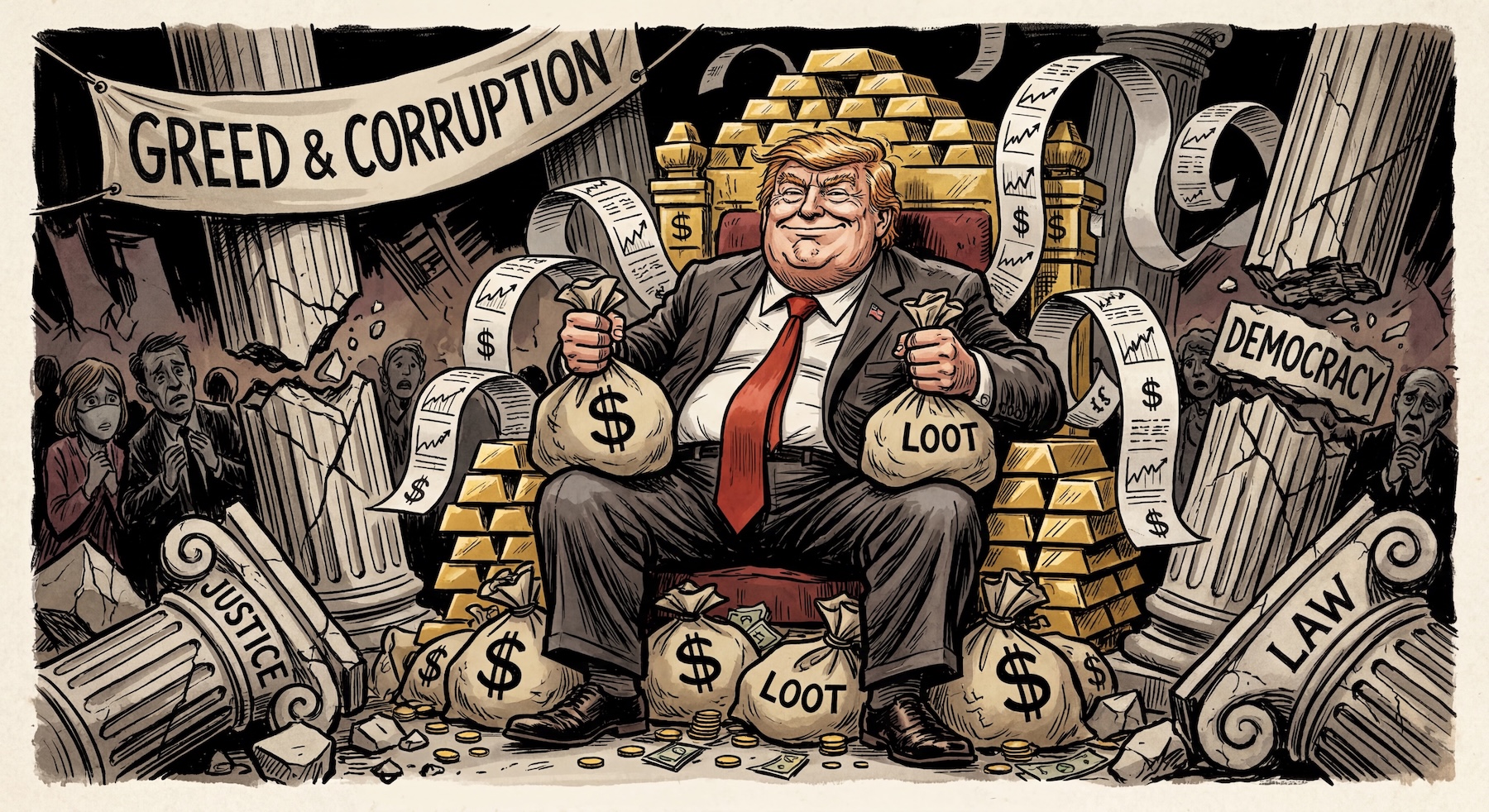
The May 2026 settlement between the Department of Justice and President Donald Trump marks a watershed in American governance. By resolving a $10 billion lawsuit over leaked tax returns through a combination of absolute tax immunity for the Trump family and the creation of a $1.776 billion taxpayer-funded “Anti-Weaponization Fund,” the executive branch has re-engineered the relationship between a sitting president, the federal tax system, and the institutional mechanisms of accountability. What follows dissects the legal mechanics, the socio-political consequences, and the historical parallels of this unprecedented arrangement.
Anatomy of the Settlement
The agreement, engineered by Acting Attorney General Todd Blanche, terminates Trump’s legal battles against his own administration’s agencies in exchange for a series of structural concessions. The original dispute centered on the $10 billion lawsuit Trump had filed against the IRS and Treasury over tax returns leaked by contractor Charles Littlejohn. Under the settlement, that lawsuit is dismissed with prejudice; Trump receives a formal government apology, but no direct monetary damages.
The more consequential terms lie in what surrounds that dismissal. Pending IRS audits of Trump’s Chicago tower — centered on the alleged “double-dipping” of $1.4 billion in losses and carrying potential penalties north of $100 million — are addressed through a DOJ addendum that permanently bars and precludes the IRS from auditing or prosecuting past returns for Trump, his sons, and the Trump Organization. In a parallel arrangement, Trump drops separate $230 million civil claims relating to the Mar-a-Lago search and the Russia probe in exchange for the creation of a $1.776 billion Anti-Weaponization Fund, drawn from the federal Judgment Fund and ostensibly intended to compensate non-party victims of alleged government overreach.
The Erosion of Constitutional Safeguards
Legal scholars and tax experts have raised severe alarms about the statutory and constitutional boundaries crossed by this settlement, and the most fundamental concern is the collapse of Article III adversarity. Under constitutional law, federal courts require genuine opposition between parties with conflicting legal interests. Because President Trump oversees the executive branch defending the lawsuit, he effectively occupied every role in the proceeding — plaintiff, defendant, judge, and jury. By settling out of court, the administration sidestepped review from a federal judge who had already expressed skepticism about whether a true “case or controversy” existed at all.
The settlement also raises serious questions about the administration of the tax laws themselves. The DOJ does not possess unilateral statutory authority to terminate active IRS audits, and the deal risks running headlong into 26 U.S.C. § 7217, a strict post-Watergate protection that makes it illegal for White House officials to directly or indirectly request the termination of an ongoing tax audit. Brandon DeBot, policy director at NYU’s Tax Law Center, captured the alarm succinctly:
This is a breathtaking abuse of the tax and legal system… giving the president and his affiliates a completely different set of rules than everyday taxpayers.
Equally troubling is the question of where the money comes from. The $1.776 billion allocation originates from the federal Judgment Fund, a permanent appropriation designed strictly to pay litigants settling actual, immediate claims against the United States. Diverting that money to stand up a broad administrative commission for future, non-party claimants — claimants with no relationship at all to the original tax-leak lawsuit — strikes many legal critics as both an improper and a legally vulnerable maneuver.
Institutional Trust and the Slush Fund Debate
The socio-political fallout has reverberated across Washington, deepening polarization and inviting immediate litigation. For decades, the American tax system has rested on the principle of voluntary compliance — the premise that the same rules apply to ordinary working families and to billionaires alike. Granting absolute immunity to a president who once boasted that avoiding federal taxes “makes me smart” risks fracturing that norm and triggering widespread cynicism if citizens come to believe the system is openly rigged for political elites.
The Anti-Weaponization Fund itself has become a focal point of controversy. Controlled by five commissioners appointed by the Attorney General and subject to at-will removal by the President, it has been labeled by congressional critics as a partisan slush fund. Because the authorizing language contains no explicit statutory exclusions, lawmakers have raised the possibility that the fund could end up compensating ideological allies, or even individuals convicted in connection with the January 6 Capitol riot. The political friction has already produced concrete legal blowback: officers from the U.S. Capitol Police have filed suit to block distribution of the fund, demonstrating that the settlement has expanded the legal battlefield rather than narrowing it.
Reversing the Lessons of Watergate
To grasp the magnitude of the 2026 settlement, it has to be set against the structural reforms enacted in the wake of Richard Nixon’s presidency. The arc from the 1970s to today is striking: where the Watergate era produced mandatory annual presidential audits as a check against executive abuse, the 2026 agreement permanently bars the IRS from auditing past filings of the Trump family.
The Nixon precedent is instructive. In the mid-1970s, an investigation revealed that Nixon had used highly dubious deductions — most famously, the donation of his vice-presidential papers — to reduce his federal income tax to nominal sums, amounting to only a few hundred dollars in one year. When confronted, Nixon delivered the line that would haunt him: “I am not a crook.” Crucially, however, he submitted to the system. He allowed the IRS to complete its investigation, accepted its adverse findings, and paid nearly $500,000 in back taxes and interest.
That crisis exposed how easily a sitting president could intimidate tax officials, and it produced a rigid, non-partisan response: in the late 1970s, the IRS established that all sitting presidents and vice presidents would be subject to mandatory annual audits. The 2026 agreement directly upends this post-Watergate legacy. Rather than submitting to enforcement as Nixon ultimately did, the administration has used the Justice Department to wipe the slate clean. A potential nine-figure penalty involving double-dipped real estate losses on the Chicago tower has been dissolved by executive fiat.
Conclusion
The DOJ–Trump tax settlement sets a powerful precedent for executive entitlement. By fusing a private family legal dispute with the machinery of federal public funding, the administration has constructed an unprecedented shield against financial and legal transparency. Proponents frame the deal as a necessary defense against “lawfare.” Its long-term cost, however, may be measured in something less tangible and far harder to recover: the structural erosion of public trust in America’s legal and financial institutions.