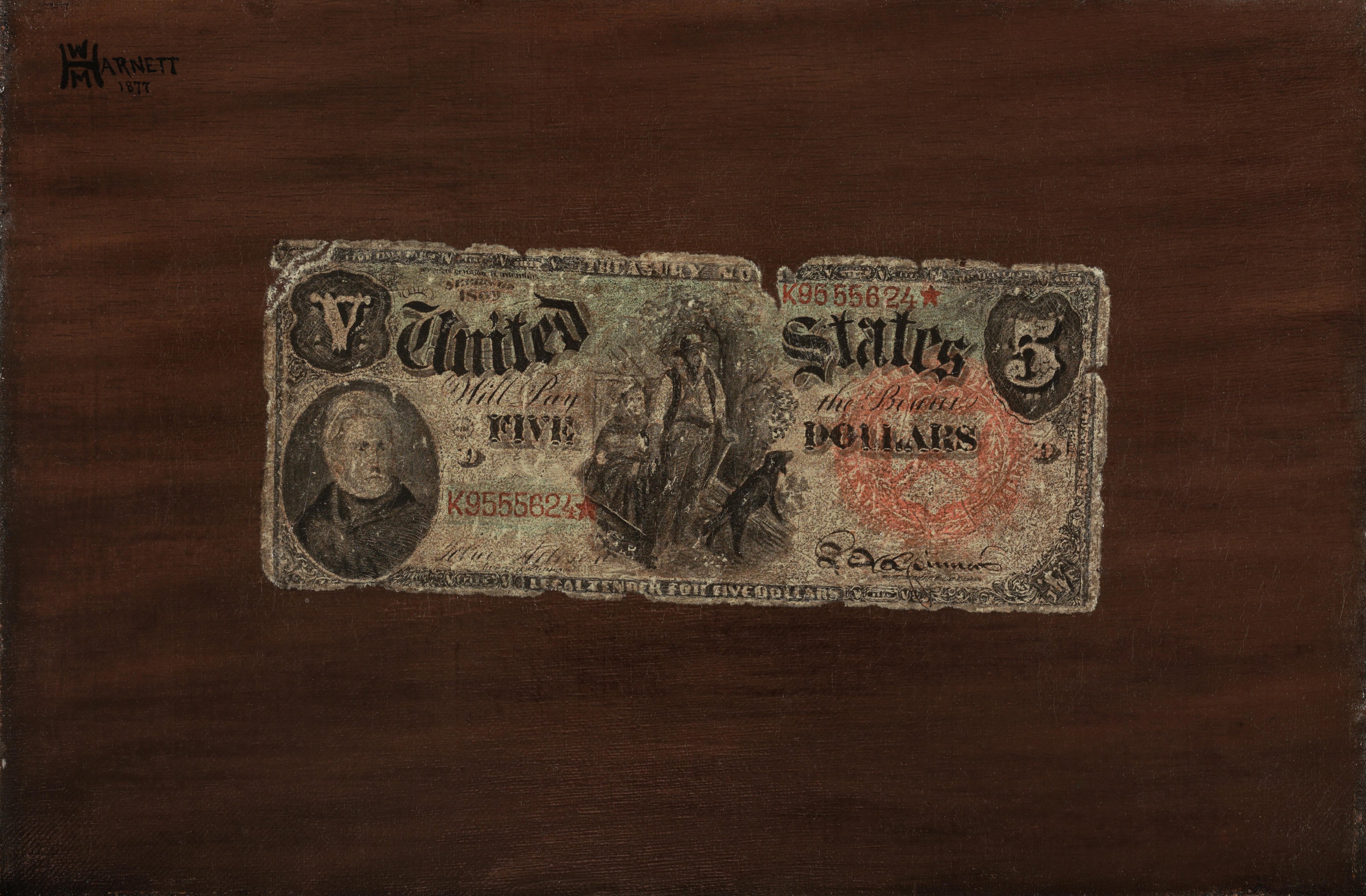
We began this reading, twelve essays ago, with the commodity and its two-fold nature, and with the strange way a relation among people comes to wear the mask of a relation among things. We end where we started. The first German edition of Capital closed its opening matter with an appendix titled The Value-Form, and there is a good story behind it. Reading the page proofs in June 1867, Engels warned Marx that the value-form analysis of the first chapter was pitched too steeply — the ordinary reader, he said, was not accustomed to such abstraction and would not cudgel his brains over the form of value — and he urged Marx to break it into short, headed paragraphs after the manner of Hegel’s Encyclopaedia. Marx answered that he had behaved dialectically: he had both divided the chapter into sections with separate headings and written a separate appendix presenting the same thing as simply and pedagogically as he could, telling the non-dialectical reader in his preface to skip the difficult pages and read the appendix instead. The matter, he wrote, was “too decisive for the whole book” to leave obscure. To finish a reading of Capital on this appendix, then, is to return to the foundation with the whole edifice now in view, guided by Marx’s own most patient attempt to make the hardest thing plain.
The Problem of the Form
The analysis of the commodity had shown it to be something double: a use-value, the tangible thing itself — iron, linen, a coat — and a value, which is something else entirely. Value, Marx insists, is purely social; not an atom of matter enters into it; it has no natural body of its own. And this is the difficulty the appendix exists to solve. A use-value can simply be pointed at. But how does value, which cannot be seen or weighed or touched, acquire a form in which it can appear at all?
The answer is that it can appear only in a relation — in the relation of one commodity to another. A thing cannot express its value in itself; twenty yards of linen are worth twenty yards of linen says nothing. Value comes to light only when one commodity expresses it in the body of a second. So the whole secret, Marx says, is hidden already in the simplest possible expression, the relation of one commodity to one other, and it is there that the real difficulty lies. There is also, lurking behind the technical question, a larger one that classical economics never thought to ask: not merely how much a thing is worth, but why the product of human labour should take the form of a value at all, and why that form should drive on, of its own accord, to money.
The Mirror
Take the simple value-form: twenty yards of linen are worth one coat. The two commodities, Marx observes, play two quite different roles. The linen is active; it expresses its value, and is said to be in the relative value-form. The coat is passive; it merely furnishes the material in which the linen’s value is expressed, and is said to be in the equivalent form. The roles are polar and cannot be held by one commodity at once: in this expression the linen cannot also be the equivalent, and to put the coat in the relative form one must reverse the equation, at which point the linen becomes the equivalent instead.
What happens in the equivalent form is the heart of it. The coat, by standing on the far side of the equation, comes to count purely as value — its usefulness as a garment set aside, its bodily form serving only as the visible shape in which the linen’s value is reflected. The body of the coat, Marx writes, becomes “the mirror” of the linen’s existence as value. The linen, which could never display its value in its own flax-and-thread body, sees that value thrown back at it in the body of another thing. Value, having no form of its own, borrows one.
Three Inversions
Why is this so hard to think, and why does it mislead? Because the equivalent form, Marx shows, rests on three quiet inversions, three places where a thing comes to stand for its own opposite.
The first: a use-value becomes the form of appearance of value. The coat’s bodily, useful form becomes the form in which something non-bodily and supersensible, value, makes itself visible. Marx illustrates this with a homely image. A sugar-loaf has weight, but you cannot see or feel its weight by looking at it; to express that weight you place the sugar in a relation with pieces of iron on a scale, and in that relation the iron counts not as iron but as a mere embodiment of heaviness, the form of appearance of weight. Just so, in the value-relation, the body of the coat represents, with regard to the linen, simply value. The second inversion: a concrete, particular labour becomes the form of appearance of abstract human labour. The tailoring that made the coat counts, in this relation, not as tailoring but as a specimen of human labour in general, labour as such. The sensibly concrete comes to count as the mere appearance of the abstractly general — as though, Marx says, one declared that Law in the abstract realizes itself in Roman law and German law, the relation becoming mystical the moment it is put that way. The third inversion: a private labour becomes labour in immediately social form. The tailor worked alone, for himself, yet his product, by serving as the equivalent, counts as directly social, as labour already in the form of equality with all other labour. These three reversals are what make the value-form both genuinely difficult and inherently deceptive: in each, a homely fact about a thing comes to masquerade as something abstract, general, and social.
Aristotle’s Shipwreck
To show that the difficulty is real and not a quirk of his own prose, Marx turns to the thinker who first analysed the value-form and, he says, did it more happily than many who came after — Aristotle. Aristotle saw clearly that to say five beds are worth one house is the same kind of statement as to say five beds are worth a certain sum of money; he saw that such an exchange requires that the things be made equal, and that they cannot be equated without being in some way commensurable. And then he stopped. True commensurability between things so different, he concluded, is impossible; the equation must be a mere makeshift for practical purposes, alien to the real nature of the things.
What halted him, Marx argues, was that he lacked the concept of value — and he lacked it for a reason that is not personal but historical. The hidden answer to Aristotle’s question, the common substance that the house represents for the bed, is human labour; the things are commensurable because both are congealed expenditures of undifferentiated human labour. But to read that off the value-form, one must already regard all human labour as equal, and Greek society, resting on slavery, took the inequality of human beings and their labours as its natural foundation. The secret of value — that all labour counts as equal human labour — can be deciphered only once the equality of human beings has acquired, as Marx puts it, the fixity of a popular prejudice, which is to say only in a society where the commodity-form has become the universal form of the product. The genius of Aristotle, Marx says, shines in his having found in the expression of value a relation of equality at all; only the limit of his historical world kept him from seeing what that equality consists in. Value, in other words, is not a fact of nature awaiting discovery in any age. It is the form taken by social labour under definite historical conditions, and a different society would not find it there to be read.
The Fetish
The fourth peculiarity of the equivalent form is the one toward which the whole analysis has been moving: fetishism, which shows itself more starkly here than anywhere. That the products of labour are values, and have magnitudes of value, and confront one another as commodities, are not natural properties of those things in the way that weight or warmth is natural to them. They are social characters — they record that the different labours of weaver and tailor count as equal human labour, that the labour was measured by its duration, that the producers stand in a definite relation to one another. But under generalized commodity production these social characters appear to the producers as objective, physical properties of the products themselves: the equality of their labours appears as the value of the goods, and the relations among the people appear as relations among the things.
It is only the definite social relation of people itself which here takes on for them the phantasmagoric form of a relation of things.
Marx is careful with the analogy. When we see a thing, light really does pass from the object to the eye; seeing is a genuine physical relation between physical things. The value-relation only looks like that. It has, in truth, nothing to do with the physical nature of the products; it is a social relation among people that merely assumes, for them, the form of a relation among things — and to find anything like it we must, Marx says, take flight into the misty realm of religion, where the products of the human head appear as independent figures endowed with lives of their own. So it is, in the world of commodities, with the products of the human hand. This is what he calls the fetishism inseparable from commodity production. It is sharpest in the equivalent form because there a thing’s bodily shape counts immediately as social value, so that the property seems to belong to it by nature — yielding, at the end of the road, the riddle of gold, which appears to possess, alongside its colour and its weight, the natural power of being exchangeable for everything else. Of all the threads in Capital, this is the one that has travelled furthest beyond it.
From Commodity to Money
The appendix closes by letting the simple form grow into money, in four steps, by its own logic. The simple form — linen worth one coat — expands, once we notice that the linen’s value can equally be expressed in tea, in coffee, in iron, in any commodity at all, into the total or expanded form: linen worth a coat, or ten pounds of tea, or a quarter of wheat, and so on without end. But that endless string is defective — incomplete by nature, a motley patchwork, with no unified expression. Reverse it, so that all those commodities express their value in one of them, and we reach the general form: coat, tea, wheat, iron, each measuring its value in the linen alone, which now becomes the general equivalent, the single body in which the whole world of commodities reads its worth — the visible incarnation, Marx says, the general social chrysalis of all human labour. The final step changes almost nothing and changes everything: when, by social custom, that privileged role hardens permanently onto one particular commodity — gold — the general form becomes the money-form. Money is not a new thing dropped into the economy from outside; it is only the fully developed value-form, the commodity’s mirror grown into a universal one. The simple commodity-form, Marx concludes, is the secret of the money-form: understand the first and the riddle of money dissolves. The derivation is logical, not a tale of how coins first appeared; its point is that money, which presents itself as the most natural and solid of things, is at bottom a crystallized social relation, and that seeing its genesis is what breaks its spell.
The Objections
The gravest objection is that the entire analysis rests on the labour theory of value, and that within a few years of Capital the marginal revolution swept that theory aside. To Jevons, Menger, and Walras, the value of a thing derives not from the abstract labour congealed in it but from its marginal utility to people and its scarcity; price emerges from subjective preference meeting supply at the margin. If that is right, then Marx’s central question — why does labour appear as value? — rests on a false presupposition, since labour does not uniquely constitute value in the first place, and the elaborate anatomy of the value-form develops a premise mainstream economics simply abandoned.
A second objection presses on fetishism. To call the commodity-relation a phantasmagoria, a veil over the true social relation beneath, presupposes that there is some transparent, more real relation being masked. But perhaps there is not. Prices and money may be, as Hayek argued, an indispensable mechanism for conveying dispersed information that no planner could assemble — not a mystification but a genuine technology of coordination. On that view, “phantasmagoric form” is loaded language, a piece of metaphysics in reverse that treats a useful institution as a spell to be broken.
A third objection targets the derivation of money. The march from simple to expanded to general to money has the feel of a Hegelian conjuring trick, a logical necessity narrated as if it were the way things had to go. And the history, critics say, refuses to cooperate: anthropologists such as David Graeber have argued that the barter economy from which money supposedly emerged is largely a myth, and that money arose as often from debt, tribute, and temple accounting as from any truck and exchange of goods. The chartalist and modern monetary traditions go further, deriving money from the state and its power to tax rather than from commodities at all. The “genesis” of money, on this reading, is a conceptual reconstruction wearing the costume of necessity.
The Replies
To the first objection, the reply is that the value-form analysis answers a different question from the one marginalism answers, and is therefore not touched by it. Marginal utility theory explains the relative prices of goods given a functioning market; it does not ask, and cannot ask, why the products of social labour take the form of values at all, why social labour must be mediated through the exchange of things, or why there is such a thing as money as a social relation. Those are Marx’s questions, and they are questions of social form, not of price magnitude. A whole tradition has revived the point on exactly this ground — Isaak Rubin early in the twentieth century, then the Frankfurt School, then the German “new reading” of Marx and today’s value-form theorists — treating Marx’s value theory as a monetary theory of social form rather than a hidden theory of price levels, and noting that on this reading it sidesteps the transformation problem that dogs the quantitative labour theory. Marginalism, in short, did not refute the value-form analysis; it answered a question Marx was not asking and left his standing.
To the second, the reply is that fetishism does not require value to be unreal. Marx is emphatic that the value-form is a real abstraction, genuinely operative in the world and not a mere mistake in anyone’s head, and he nowhere denies that money is useful. The claim is narrower and stranger: that this real and effective form is historically specific yet presents itself as natural and eternal, and that under it the social character of people’s labour is established only behind their backs, after the fact, through the exchange of their products, rather than by any conscious social decision. Hayek’s insight that the price system marshals knowledge no planner could gather is not a rebuttal here but very nearly a restatement: the coordination is achieved precisely by converting the relations among people into relations among things that move by laws no one controls. Whether one names the result a spontaneous order to be admired or an alienation to be overcome is the genuine political question; the structural description — social relations operating through autonomous thing-relations — is one both sides can accept.
To the third, the reply concedes a real point and contains the damage. Marx’s derivation is explicitly logical rather than historical; calling the simple commodity-form the secret of the money-form is a claim about conceptual structure, not chronology, and he does not pretend to be narrating money’s first appearance on earth. The anthropological demolition of the barter-origin myth lands most heavily on Adam Smith, who did tell that story, and not on an analysis concerned with the structure of generalized commodity exchange once it is established. It is fair to say that Marx sometimes lets the logical and the historical blur, and fair to insist that the reader know there is a serious rival account — the chartalist and modern monetary view that money is a creature of the state and of debt rather than of commodities. But the core structural thesis, that money is the developed form of the commodity’s own expression of value, does not depend on winning the argument about origins; it stands or falls as a claim about how the value-form works, not about where it first came from.
The Cell-Form
We have come back to the beginning. The series opened with the commodity’s double life and the fetishism of the value-form, and it closes on the appendix in which Marx set that same foundation out as plainly as he knew how. The book itself does not end here; its last word is the bloody history of primitive accumulation and the expropriation of the expropriators, the political and historical crescendo toward which the whole argument drives. But to end a reading on the value-form is to return to what Marx called the economic cell-form, the germ out of which value, money, and capital all unfold, and to look at it now with the entire organism grown up around it. Everything the later parts described — surplus-value, the working day, machinery, wages, accumulation, the reserve army — is already implied in the quiet claim that the product of labour, under these conditions, must take the form of a value and express it in the body of another thing.
And the deepest stake of the book is gathered here. If value, money, and capital were natural facts, like weight or the seasons, there would be nothing to do but submit to them. The value-form analysis argues that they are instead historically specific social forms — forms that arose and could pass — and it is that argument, more than any prediction about wages or crises, that has outlived the rest, running through Lukács’s reification and the Frankfurt School’s critique of the commodity to the value-form theorists still writing today. Whether one takes it for the rigorous foundation of a science of capitalist society or for an intricate metaphysics resting on a theory of value the economists left behind, it remains the most haunting passage Marx wrote. And its truth is the one Harnett’s painted banknote tells in a single image: that value wears the form of a thing so convincingly that we take the form of appearance for the thing itself — so convincingly that the state could not tell the picture of value from value, and called the difference a crime.
A Note on Sources
Throughout this series, quotations from Capital have followed the editions hosted by the Marxists Internet Archive at marxists.org/archive/marx/works/1867-c1. The main text is given in the Samuel Moore and Edward Aveling translation, edited by Friedrich Engels and first published in 1887, now in the public domain. The appendix discussed here, The Value-Form, is given in the translation by Mike Roth and Wal Suchting, first published in Capital and Class, No. 4 (1978), and made available by the Archive under a Creative Commons Attribution-ShareAlike licence. My thanks to the Archive and its volunteers for keeping these texts freely and openly available.