The federal grand jury in Miami returned the indictment in April. The Justice Department unsealed it on May 20 — the anniversary of the day in 1902 when the United States formally ended its military occupation of Cuba. The rollout was pure spectacle. Held at the Freedom Tower, the iconic building where Cubans fleeing the revolution were once processed for asylum, the press conference was packed with South Florida mayors and local politicians. From the podium, the acting Attorney General announced that Raúl Castro, age 94, was wanted on charges of murder and conspiracy to kill American citizens, coolly noting that he expected the defendant to appear in a US courtroom by his own will or another way. Two things are worth holding in mind at once about this announcement. It represents a genuine symbolic blow to the Cuban regime, yet it is simultaneously wrapped in stagecraft so elaborate that the legal substance is almost incidental to the political function. Reading the difference between those two layers matters more than the headlines suggest. Start with the symbolism, because it is real. No US administration has ever criminally indicted a sitting or former Cuban head of state for acts undertaken as head of state. The 2003 indictment of one of the Cuban pilots involved in the 1996 Brothers to the Rescue shootdown was an outlier, representing a charge against a uniformed officer for a specific operational act. Bringing the same case up the chain of command to the man who, with his brother, made the final decision is a categorically different gesture. It treats the Cuban revolution not as an adversary government with whose policies Washington disagrees, but as a criminal enterprise whose senior leadership is personally liable under American law.
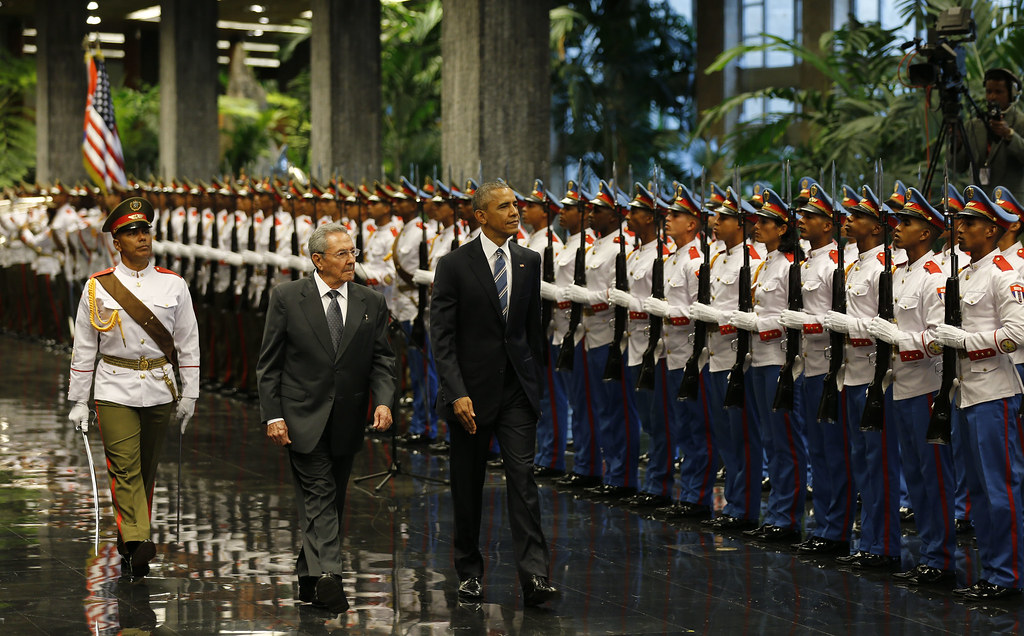
Raúl Castro is the obvious target for this shift in policy. After the death of Fidel Castro in 2016, he became the living embodiment of the Revolution. While Miguel Díaz-Canel holds the formal title of head of state, Raúl Castro remains the ultimate authority and surviving founder. To charge him with murder is to charge the Revolution itself, an implication the Cuban government recognized immediately. Its official response framed the indictment as an infamous attack against the leader of the revolution, making it clear that neither Havana nor Washington is pretending he is being treated as a private citizen.
The legal framing also collapses a sovereign state decision, specifically the response to repeated unauthorized overflights of national territory by a Miami-based exile organization, into the ordinary murder of American citizens. Whatever one’s view of the merits of the 1996 shootdown, given that declassified documents partially support the Cuban claim that Washington was warned in advance and chose not to act, the prosecution effectively erases any distinction between state action and crime. This is precisely the blueprint required to use the American criminal justice system as a tool for regime change, mirroring the precedent set with Maduro in Venezuela.
Beyond the symbolic weight of the indictment, the political theater surrounding this rollout is difficult to overstate, as the timing and choreography were meticulously engineered. The indictment was returned a month ago, meaning the grand jury did not choose the May 20 date; the Justice Department did. Furthermore, the Freedom Tower is not a federal courthouse, but rather an emotional monument for the Cuban-American diaspora. Standard federal indictment announcements are not normally flanked by South Florida politicians, and the acting Attorney General’s warning that Castro would appear by his own will or another way sounds less like a prosecutor speaking of a defendant and more like a commander-in-chief addressing an enemy.
This choreography extended well beyond the podium. Across town, the Secretary of State released a Spanish-language video addressed directly to the Cuban people, while within hours, the aircraft carrier Nimitz entered the southern Caribbean. None of these events happened by accident. The legal action and the political performance are doing different work. The indictment supplies the legal scaffolding that can later be invoked to justify anything from escalated sanctions to a military raid, while the performance itself is aimed squarely at two distinct audiences.
The first audience consists of South Florida voters, whose political weight has driven this case for three decades and whose February letter to the President helped prompt this round of charges. The second audience is the Cuban public, who are being told bluntly that the United States considers their leadership to be common murderers. The choice of May 20 sharpens this message, harkening back to an era when Washington treated Cuba explicitly as its backyard. A prosecution genuinely limited to securing justice for the four men killed in 1996 would not require an aircraft carrier, a parallel address from the Secretary of State, or a highly politicized venue. This is the choreography of maximum pressure. This carefully choreographed display raises the inevitable question of whether a Venezuela-style military operation is next. The probability of a Maduro-style commando raid in Cuba over the next six to twelve months sits at roughly fifteen to twenty-five percent. The apparatus is entirely in place, from the indictment and carrier presence to the public rationale, and the January operation in Caracas is fresh enough that ruling out a sequel would be foolish. However, several critical factors cut heavily against direct military intervention.
The White House’s own stance provides the strongest counter-argument. Trump himself told reporters that there would be no escalation because he believes Cuba is already falling apart. This perspective reflects an internal assessment that the current oil blockade, which has produced twenty-two-hour blackouts and sent black-market gasoline above forty dollars a gallon, is successfully driving regime collapse without the political risks of military action. Additionally, reports indicate the Nimitz is deployed to signal intent rather than launch strikes, which is a deliberate contrast to how the Gerald Ford was deployed in January.
There are also steep operational difficulties to consider. Raúl Castro is ninety-four years old and largely detached from day-to-day governance, and Cuba remains an island with a highly cohesive, single-party security apparatus. A Caracas-style snatch-and-extract is an exponentially harder military problem to solve in Havana than it was in a fractured Bolivarian state. The likelier path forward is sustained economic strangulation aimed at forcing either an internal collapse or a negotiated transition that sidelines GAESA, the military conglomerate explicitly named by Rubio. The CIA director’s quiet visit to Havana, where he demanded economic restructuring and the eviction of Russian and Chinese intelligence operations, suggests Washington is testing what Havana will concede under pressure. Tellingly, Cuba’s ambassador to the United Nations gave his first on-the-record interview in years specifically to signal that Havana remains open to talks. This is the behavior of a government that knows the squeeze is working.
Ultimately, the indictment exists in two realities at once. It is a historic symbolic blow that criminalizes Cuba’s revolutionary leadership and delivers long-deferred satisfaction to South Florida. Simultaneously, it is a masterclass in political stagecraft designed for domestic and hemispheric resonance. The most likely outcome is that this indictment never produces a defendant in a US courtroom, Raúl Castro dies in Havana, and the legal framework established this week becomes leverage in a grinding campaign of diplomatic and economic pressure designed to outlast the old guard. The critical metric to watch over the coming weeks is not the courtroom docket, but whether the backchannel talks opened by Ratcliffe in Havana yield concrete concessions. If they do, the theater will have served its purpose. If they do not, the scaffolding remains in place, waiting for the next act.