America’s maximum pressure campaign against Cuba has achieved something remarkable: it has made the island’s misery someone else’s problem. Cuban migrants who once streamed toward the U.S. border—down 99 percent from the Biden years—now move south instead, flooding Brazil, Mexico, and Uruguay with asylum claims. Brazil alone absorbed more than 41,000 Cuban applicants in 2025, nearly double the previous year; Cubans now make up 55 percent of all asylum-seekers there. Mexico issued humanitarian visitor cards to Cubans at a rate that jumped from 23 percent of its total in 2024 to 78 percent this year. Washington has redirected the pressure without relieving it, and the bill is landing in capitals that have little reason to be grateful.
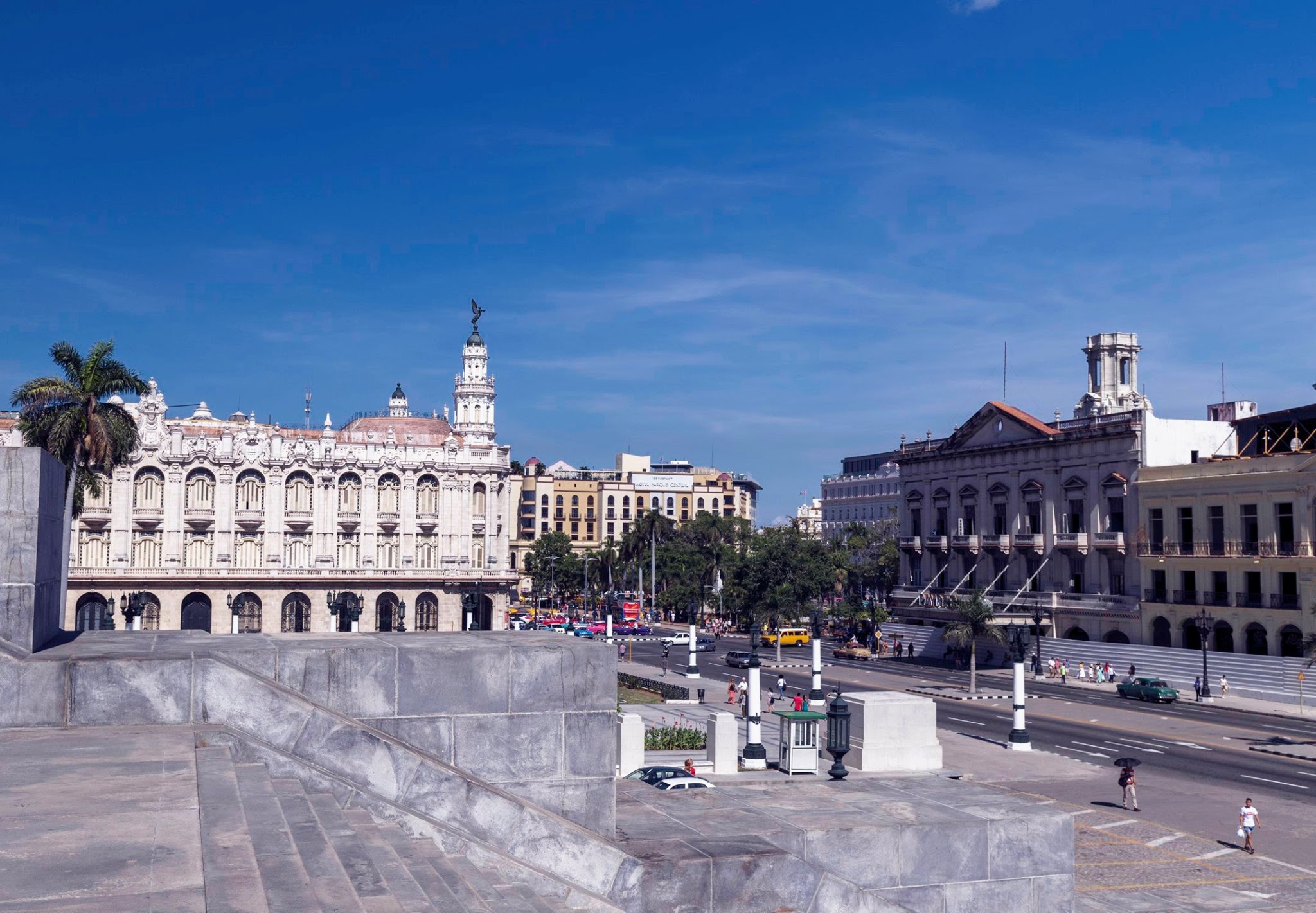
On the island itself, the arithmetic of survival has become surreal. Cuba has not received a meaningful drop of oil in months. A liter of gasoline—once $1.20—now fetches $8 on the street and $40 a gallon on the black market, on an island where the average monthly wage is $16. Hospitals are postponing surgeries. Factories and transportation have ground to a standstill. Families cook over charcoal and wood. The iconic Havana Club rum is now sold in imported bottles because high energy costs make it uneconomical to manufacture glass on the island. Tourism, which once accounted for roughly 8 percent of Cuba’s economy and drew nearly 400,000 visitors a month at its peak, has cratered: international arrivals fell 48 percent in the first quarter of 2026. Hotels in Old Havana report occupancy rates in the single digits. Air France and Air Canada have suspended service because they can no longer reliably refuel return flights. “It’s like a pandemic situation, but even worse,” one Italian hotelier told a reporter. “Old Havana is a desert.”
The tanker story captures the blockade’s mechanics in miniature. A Russian vessel called the Universal, carrying 242,000 barrels of badly needed diesel, spent weeks drifting in the Atlantic—following the same pattern as a Chinese-owned tanker earlier this year—before abruptly turning south toward South America. Russia’s energy minister had declared “we won’t abandon the Cubans”; the tanker’s left turn suggests otherwise. The Universal is now likely to sell its cargo, worth an estimated $25 million, at market price elsewhere. That is the texture of maximum pressure: not dramatic confrontation but the slow accumulation of deferrals, detours, and abandoned promises.
It is worth pausing on why the world is not louder about any of this. For Europeans of a certain generation, Cuba was as much a progressive cause as a country—a plucky island that had overthrown a corrupt regime, sent soldiers to Angola and Ethiopia, and withstood American pressure to defend its independence. That solidarity has largely evaporated, and not only because Europe is consumed by Russia’s war in Ukraine and the fallout from the U.S.-Israeli campaign against Iran. It has evaporated because Cuba’s plight is partly self-inflicted. Decades of communist mismanagement crushed economic initiative in the name of a lowest-common-denominator egalitarianism. A tropical island with fertile soil has for years imported 80 percent of its food. The EU and Brazil offered incentives and technical assistance to shift from sugar cane to food production; both ran, repeatedly, into a wall of ideology. Up to a million mostly educated Cubans have emigrated in two years. “Cuba today is anything but libre,” as one former EU ambassador to Havana put it. It is hard to rally international opinion behind a government that has so comprehensively failed its own people, even when the punishment being administered from outside is disproportionate and, in the view of most international lawyers, illegal.
Cuba’s traditional patrons have proved equally useless. Russia, once Havana’s main protector, is bogged down in Ukraine and watched impotently as its allies in Syria and Iran were picked off. It sent one oil shipment in March; the Universal’s detour suggests the second may never arrive. Venezuela, which had been subsidizing Cuban oil supplies for years, ceased to be a factor in January when a U.S. special-forces operation abducted Nicolás Maduro from his military headquarters in Caracas—killing thirty-two Cuban soldiers and intelligence officers who were part of his security detail in the process—and installed a government happy to work with Washington. China has friendly ties with Havana but bigger calculations with Trump; Cuba did not appear to figure in their summit this month, and it is simply not a large enough market for Beijing to risk secondary sanctions on its behalf. Even the left-governed Mexico and Brazil, which are absorbing Cuban migrants by the tens of thousands, have not dared send fuel. Within the EU, Hungary voted against the annual UN resolution calling for an end to the embargo in 2025; six other member states abstained. The unanimity that once gave European criticism of U.S. Cuba policy its limited moral weight is gone.
Brazil’s Lula offers a partial exception—and an instructive one. He told Trump at the White House this month that Cuba “needs a chance” and asked him to lift the blockade. Trump told him he was not invading the island. Lula’s approach to the whole confrontation is strategic: work the personal relationship, hold the line on sovereignty, avoid the fate of leaders who bow their heads and cannot raise them again. He has brokered trade concessions and eased sanctions by making himself useful to Washington without capitulating to it. But his mediation on Cuba has gone nowhere, and Washington has shown little interest in Brazilian involvement. The limits of personal diplomacy are on display: Lula can make Trump smile; he cannot make him change a policy.
The military dimension has grown harder to ignore. The USS Nimitz now sits in the Caribbean. U.S. surveillance flights around the island have increased—a step that often precedes operations, or is intended to be read that way. A federal grand jury has indicted former President Raúl Castro for the 1996 shootdown of civilian aircraft, the same legal-pretext playbook Washington used before the Maduro raid. “Other presidents have looked at this for 50, 60 years,” Trump said last week. “It looks like I’ll be the one that does it.”
Analysts are skeptical that intervention is imminent, but the options are being openly discussed—and Cuba’s ability to resist them is far diminished from its Cold War peak. The island that once fielded more than 200,000 soldiers, deployed armored brigades to Syria and Angola, and ran intelligence penetrations inside the Pentagon and State Department for decades now musters 40,000 to 45,000 active-duty troops. Its air force’s handful of warplanes are likely not airworthy; its naval vessels don’t work beyond small coast-guard boats. “Cuba had a First World military in a Third World country,” one former Obama-era defense official said. “It’s a shell of a shell of what it used to be.” The oil blockade compounds this directly: troops cannot train, equipment cannot be maintained, and fuel is essentially unavailable except on the black market.
A decapitation strike—cyber warfare, radar jamming, special forces—would face far fewer obstacles than a conventional assault. But the element of surprise, which made the Maduro raid possible, is gone. “You’d have to be insane to think Raúl Castro is not being moved on a regular basis right now,” said a former Defense Intelligence Agency official. One former intelligence officer suggested Castro would sooner kill himself than be taken. The more consequential obstacle is what comes after. Venezuela had Delcy Rodríguez waiting in the wings and a credible democratic opposition to provide legitimacy. Cuba has neither. Seven decades of one-party rule have choked off any credible alternative leadership. “There is no Cuban version of Delcy,” as one analyst put it. Cuba’s defense doctrine, Guerra de Todo el Pueblo (War of All the People), is explicitly designed to survive decapitation: defense is decentralized, and removing figureheads may fracture the country into irregular resistance rather than collapse it into compliance. “If they did get rid of the regime, you’d have a complete vacuum”—ninety miles from Florida, with no obvious exit and enormous pressure on Washington to fill it.
The likeliest reading of the military buildup, several former officials suggest, is coercive theater: an attempt to press Havana into concessions in stalled talks over political prisoners and economic openings. Cuba’s foreign minister frames it as a “cognitive war”—manufactured pretexts, leaked intelligence, coordinated press narratives—designed to build domestic and international permission for action that Washington has not yet decided to take. Both readings can simultaneously be true. The drone report, the Castro indictment, the carrier deployment: each is ambiguous enough to serve as pressure or as prelude. Washington frames all of this as self-defense against a failed state harboring adversary intelligence operations. Havana counters that the U.S. has never produced public evidence of those claims and that the Castro indictment—timed thirty years after the shootdown it supposedly concerns—belongs to a long tradition of legal architecture built to justify what has already been decided. Both narratives cannot be entirely right, but history suggests that architecture built to justify intervention tends to outlast the political will to question it.
The maximum pressure campaign has strangled Cuba’s economy without breaking its government. It has collapsed tourism, scattered a million Cubans across Latin America, turned potential diplomatic partners into reluctant bystanders, and driven tankers to reverse course in mid-ocean. None of this has produced the concessions Washington demands. Cuba’s long decline is partly of its own making — the revolution’s failures are real, and the government that presided over them deserves no romantic defense. But there is a difference between pressure that advances a negotiated outcome and pressure that simply accumulates, with no clear theory of how it ends. The blockade may yet force Havana to the table; it may instead produce a humanitarian collapse that triggers the very migration wave and military gamble Washington is trying to avoid. A strategy that cannot distinguish between those two outcomes is not maximum pressure. It is maximum risk.