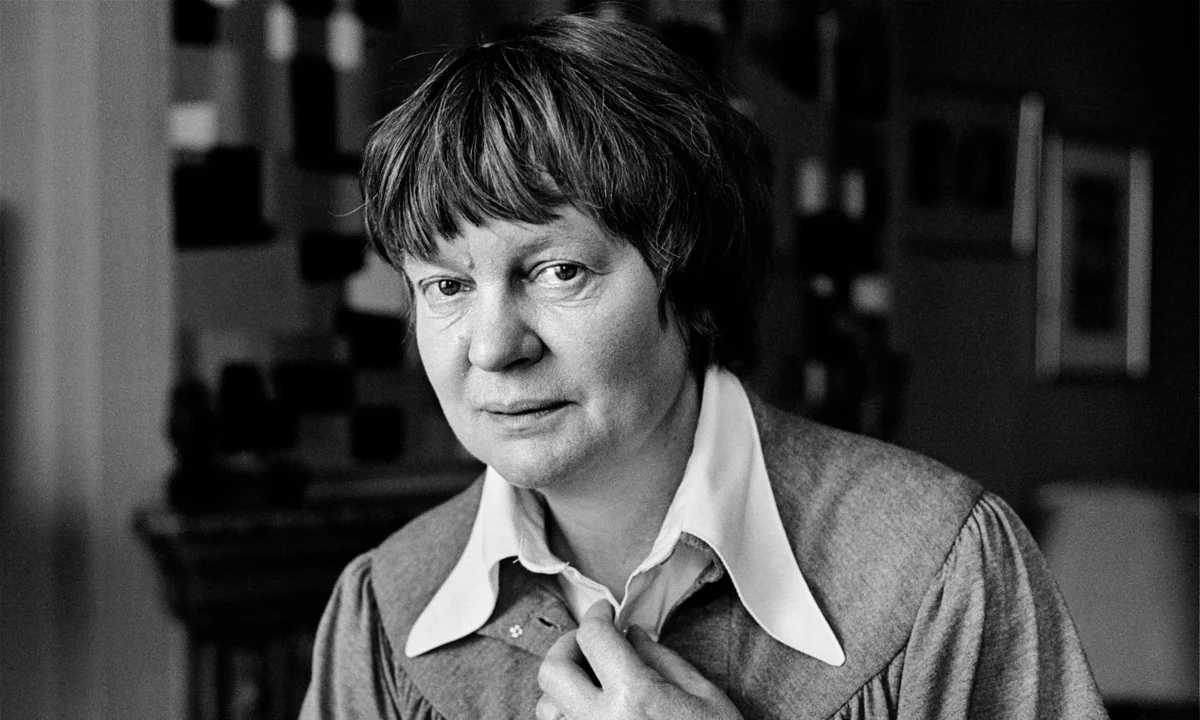
Iris Murdoch held a singular perspective on metaphors, which she frequently explored in her philosophical writings. In Metaphysics as a Guide to Morals, a collection of her most prominent essays, she delves into the role of metaphorical thinking in shaping our understanding of reality and our moral life.
Murdoch maintained that metaphors are not merely linguistic devices, but essential instruments with which we perceive and make sense of the world. Far from being decorative or ornamental, they can profoundly shape our thinking and influence the way we relate to reality.
According to Murdoch, metaphors play a crucial role in moral perception and understanding: they illuminate aspects of our experience that are difficult to express directly and help us grasp complex ethical concepts and relations. They also function as tools of moral imagination, allowing us to conceive of alternative ways of being and acting in the world.
The Sovereignty of the Good
“The Sovereignty of the Good over other concepts” is the finest essay in the collection. There, Murdoch explores the good as an indispensable metaphor of moral thought, and argues against the prevailing notion that morality can be reduced to a set of rules or principles, advocating instead for a more nuanced and complex understanding of ethical conduct.
A central element of her argument is the idea that the good arises from a profound commitment to reality and genuine moral attention to the needs and interests of others. Murdoch rejects the idea of the good as mere abstraction or ideal, instead emphasizing its practical implications for conduct and human relations.
Critique of Rigid Ethical Systems
Murdoch also criticizes the tendency to conceptualize morality in terms of rigid codes or ethical systems, arguing that such approaches fail to capture the complexity and richness of moral life, and lead to moral blindness and moral distortion.
Instead, she proposes that the good involves a kind of moral perception that allows us to see the world and our place in it with greater clarity. To this end, she emphasizes the importance of empathy, imagination, and the capacity to contemplate things from multiple perspectives.
Fragments from the Essay
“I assume that human beings are naturally selfish and that human life has no external point or τέλος. That human beings are naturally selfish seems to be shown by the evidence… The psyche is a historically determined individual relentlessly looking after itself. It resembles a machine; in order to operate it needs sources of energy, and it is predisposed to certain patterns of activity. The area of its much vaunted freedom of choice is not normally very great. One of its chief pastimes is day-dreaming. It is reluctant to face unpleasant realities. Its consciousness is not normally a transparent crystal through which it views the world, but a cloud of more or less fantastic reverie designed to protect the psyche from pain.”
“I have been speaking of the indefinability of Good; but is there really nothing more we can say about it? … Philosophers have often tried to discern such a relation: Freedom, Reason, Happiness, Courage, History have recently been tried for the purpose. I do not find any of these candidates convincing. They seem in each case to represent the philosopher’s admiration for some specific aspect of human conduct considerably below total excellence… I want now to speak of what is perhaps the most obvious as well as the oldest and most traditional candidate… and that is Love. Of course Good is sovereign over Love, as it is sovereign over other concepts, because love can name something bad.”
“Goodness is connected with the acceptance of real death and real chance and real transience… The acceptance of death is an acceptance of our own nothingness, which is an automatic spur to concern ourselves with what is not ourselves. The good man is humble; he is very unlike the neo-Kantian great Lucifer. He is much more like the Kierkegaard tax-collector… The humble man, because he sees himself as nothing, can see other things as they are. He sees the pointlessness of virtue as well as its unique value and the endless extent of its demand.”
Passages quoted from Iris Murdoch, The Sovereignty of Good (Routledge, 1970).