The Middle East in May 2026 is not the Middle East of a year ago, and the headlines of the past week make clear how comprehensively the February strikes have reordered it. The killing of Supreme Leader Ayatollah Ali Khamenei on February 28, the ongoing blockade of the Strait of Hormuz, and the steady drumbeat of secondary operations from Gaza to southern Lebanon together describe a region in which the old equilibria — American security guarantees, Iranian deterrence, Gulf neutrality, and predictable energy flows — have all collapsed at roughly the same time. What is taking their place is harder to name, but its outlines are becoming visible.
The Iran question is unresolved, not closed
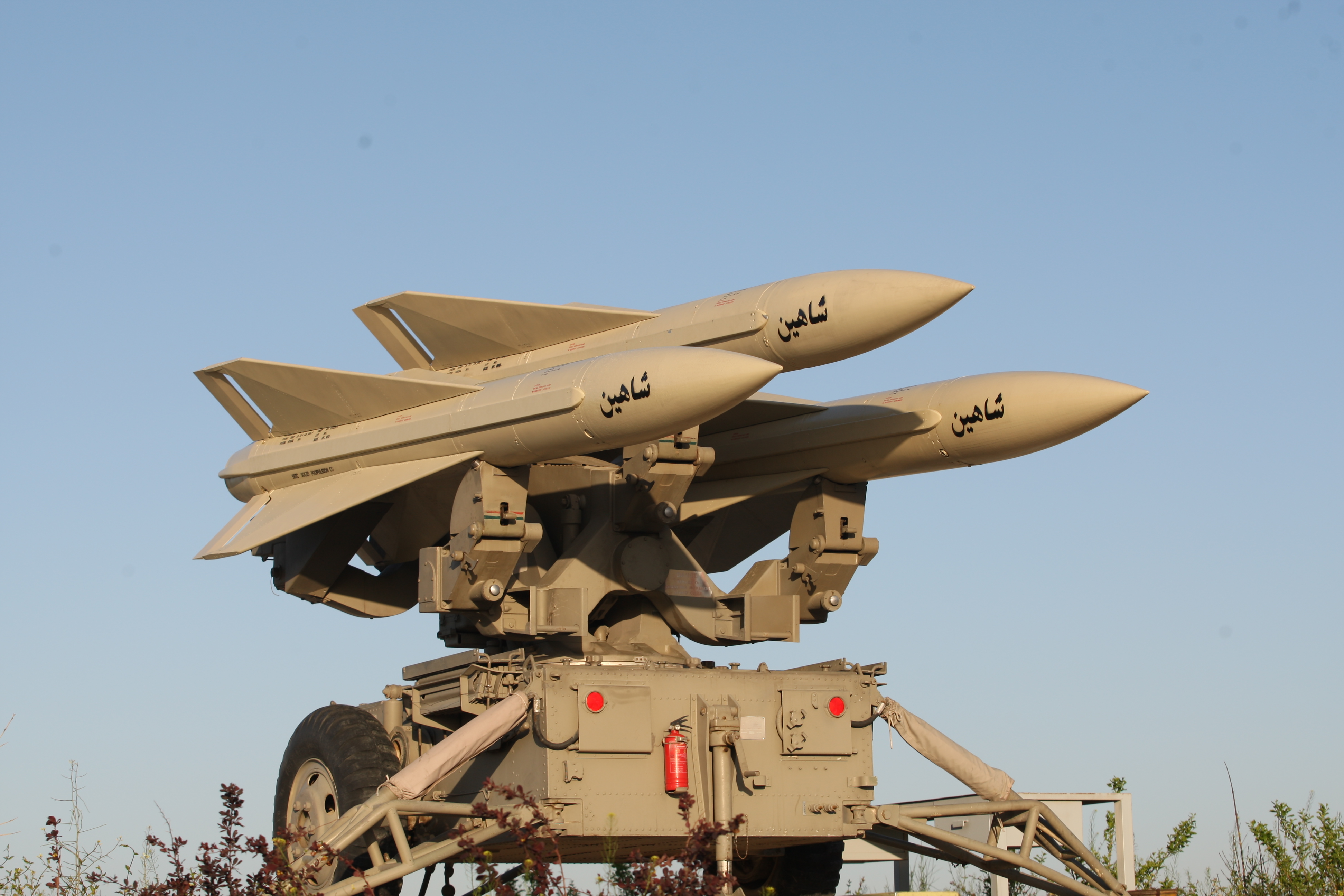
The most consequential finding in the recent intelligence reporting is that Iran retains operational access to thirty of its thirty-three missile sites along the Strait of Hormuz. This directly contradicts the administration’s account of a war won decisively in February, and it explains why negotiations remain stalled. Tehran is not bargaining from the position of a defeated power; it is bargaining from a position of degraded but functional deterrence, which is precisely the kind of posture least conducive to concessions. Both sides are now anchored to positions the other calls unacceptable, and both Trump and Defense Secretary Hegseth have warned that strikes could resume. The Pentagon’s revised cost estimate of $29 billion — four billion higher than two weeks ago, with no clear request to Congress for additional funding — suggests an administration that is preparing for a second round without yet committing to one.
President Pezeshkian’s outreach to Pope Leo XIV is worth reading carefully in this context. The framing — gratitude for moral clarity, condemnation of “unrestrained violence,” accusations of American “illusion of absolute power” — is not aimed at the Vatican so much as at European publics and the non-aligned world. With Khamenei dead and the clerical hierarchy still recomposing itself, Pezeshkian is performing a softer, more diplomatically literate Iranian face to international audiences. Whether that face has authority over the missile sites is the question no one outside Tehran can yet answer.
The energy crisis is the story under every other story
Iraq’s collapse from roughly 93 million barrels per month through Hormuz to just 10 million is the kind of figure that resets economic expectations across an entire region. Commercial tankers are not refusing to enter the waterway because of policy; they are refusing because maritime insurance is essentially unavailable, and no shipping company can absorb the loss of a vessel against a margin business. This is the mechanism by which a military conflict becomes a structural global energy shock. The windfall accruing to American producers is real, but it is also politically corrosive — every barrel of premium-priced U.S. crude is a reminder to allies that the war’s costs and benefits are unevenly distributed.
Baghdad’s response is instructive. The resumption of the Kirkuk–Ceyhan pipeline at 200,000 barrels per day, with a path to 500,000, marks a reconciliation with the Kurdistan Regional Government that would have been unthinkable two years ago. The fast-tracked deals with Chevron and ExxonMobil are equally significant: Iraq is binding itself more tightly to American energy capital at precisely the moment when its security relationship with Washington is most strained. Oil Minister Mohammed’s insistence on remaining within OPEC+ — even as the UAE has exited — suggests that Iraq still sees collective production discipline as the better hedge than market freedom, but it is negotiating hard for a higher ceiling. Every Gulf government is now making a version of this calculation: how to extract maximum revenue from a crisis-priced market without locking themselves into commitments that constrain them when prices normalize.
The Gulf is quietly rewriting its security architecture
The disclosure that Saudi Arabia and the UAE carried out their own secret attacks inside Iran is the single most underappreciated story of the week. For decades the Gulf monarchies have outsourced deterrence to Washington in exchange for arms sales, basing rights, and rhetorical commitment. The February war showed those guarantees to be conditional in ways the monarchies had not fully internalized, and the response has been characteristically pragmatic: do it themselves, and do it quietly. The reported secret trip by Prime Minister Netanyahu to the UAE — confirmed by one side, denied by the other — fits the same pattern. Israeli-Emirati coordination is now extensive enough to require denial, which is to say extensive enough to matter.
The domestic correlate of this realignment is the wave of arrests across Gulf states of citizens accused of belonging to Iran-linked cells. Some of these cases are likely real; others almost certainly are not. What they share is a function: legitimizing accelerated authoritarian consolidation under the cover of wartime necessity. Kuwait’s account of an armed Iranian incursion at Bubiyan Island on May 1 sits at the intersection of these trends — a genuine security incident, a justification for further securitization, and a signal to Tehran that even the most accommodating Gulf state will now respond with force.
China is the structural winner, and Washington knows it
The most uncomfortable line in the recent reporting is that the war has tied the United States more closely to China, not less. Rebuilding the weapons stockpiles drained in February requires rare-earth minerals that China dominates the processing of, and there is no near-term substitute. The optics of Trump traveling to Beijing to ask Xi to pressure Iran into reopening Hormuz — and returning without that commitment — illustrate the leverage problem precisely. Iran’s permission for Chinese vessels to pass through Hormuz during the Trump-Xi meeting was not a coincidence; it was a demonstration, calibrated to be visible.
Layered on top of this is the U.S. intelligence assessment that Chinese firms are planning weapons transfers to Iran routed through third countries. Whether or not those shipments materialize at scale, the planning itself is the message: Beijing has options it can credibly threaten to exercise, and Washington’s ability to respond is constrained by its own supply-chain dependencies. The U.S. naval blockade has intercepted dozens of vessels since mid-April, but a steady trickle of Iranian cargo is still reaching Chinese ports. Sanctions enforcement at this scale is a war of attrition, and attrition wars favor the side with longer time horizons.
The secondary fronts continue burning
The killing of Izz al-Din al-Haddad in Gaza City — three fighter jets, thirteen munitions, his wife and daughter killed alongside him — closes another chapter in the systematic decapitation of Hamas’s military wing. Al-Haddad had veto power over ceasefire and hostage frameworks, and the IDF’s justification rests on the claim that he was covertly reconstituting the northern brigades. That justification will be contested, but the operational pattern is now well established: ceasefire frameworks coexist with targeted killings of figures Israel deems active threats, and the same logic applies in southern Lebanon, where the forty-five-day extension of the Israel-Hezbollah cessation explicitly preserves Israel’s right to strike. The Gaza Health Ministry’s report of thirteen dead and fifty-seven wounded in a single twenty-four-hour window is the human cost of that arrangement, distributed across a medical system that no longer has the supplies or fuel to absorb it.
The structural problem with the Lebanon track is that the negotiations are now bifurcating — a Pentagon-led security track on Hezbollah disarmament beginning May 29, and a State Department political track on border demarcation in early June. Splitting these processes makes each more manageable in isolation but harder to close together, and Hezbollah has every incentive to slow the disarmament track until the political track yields something concrete. A “porous” ceasefire, in the diplomatic vocabulary of the moment, is one designed to last exactly as long as both sides find it more useful than the alternative.
What to watch
Three indicators will tell us more than any official statement over the next sixty days. First, whether the Pentagon’s funding request for the Iran conflict materializes — and at what scale — will reveal how seriously the administration is preparing for a second round of strikes. Second, whether Iraq’s Ceyhan throughput climbs toward the announced 500,000-barrel target will indicate how durable the new northern export architecture is, and by extension how long Hormuz can remain effectively closed without breaking Gulf economies. Third, whether further Gulf citizens are arrested on Iran-linked terrorism charges will signal whether the wartime authoritarian consolidation is stabilizing or accelerating.
The deeper pattern beneath these indicators is a region in which every actor has lost faith in the durability of external guarantees and is hedging accordingly. Iran is hedging through China and through preserved missile capacity. The Gulf states are hedging through unilateral action and quiet coordination with Israel. Iraq is hedging through diversified export routes and American capital. Israel is hedging by continuing to strike whenever it judges the moment permits. The United States is hedging by maintaining the option to resume the war while pursuing negotiations it does not yet have the leverage to close. None of this adds up to a stable peace. It adds up to a managed instability — one that can persist for a long time, and one whose costs are being paid disproportionately by people who have no seat at any of the tables.