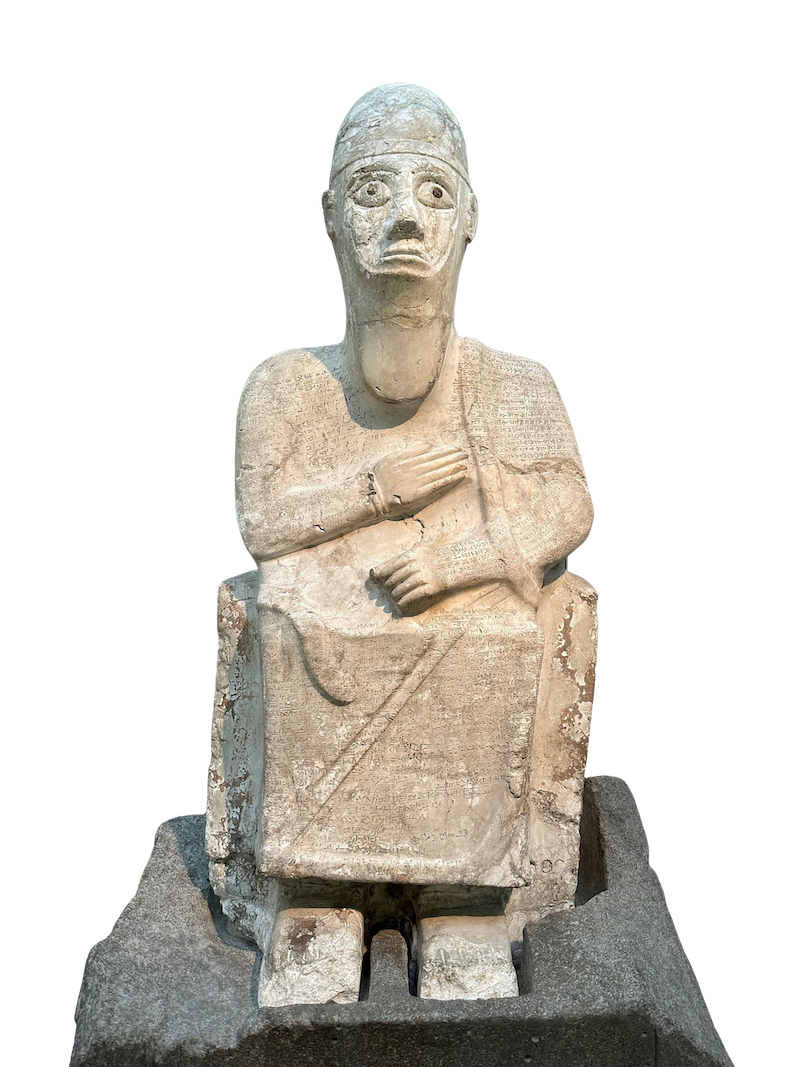
Among the ruins of Alalakh (modern Tell Atchana in southern Turkey), no artifact has captured the imagination or stirred more scholarly debate than the Statue of Idrimi. Unearthed in 1939 by the British archaeologist Sir Leonard Woolley, this 15th-century BCE dolomite figure is far more than a piece of ancient art — it is a deeply personal political manifesto carved directly into the body of the king it depicts.
The Tale of the Inscribed King
What sets the Statue of Idrimi apart is the 100-line cuneiform inscription that spills across its front, wrapping over the king’s robes, his throne, and even his cheek. Written in a regional dialect of Akkadian, the text reads as an extraordinary first-person autobiography — part royal apologia, part Bronze Age epic.
The story unfolds in four acts:
- The Flight. Idrimi, a young prince, flees his home in Aleppo after an unspecified “crime” or coup deposes his family.
- The Exile. Refusing to live as a second-class subject in his mother’s homeland of Emar, he takes his horse and chariot into the Canaanite desert.
- The Habiru Years. He spends seven years among the Habiru — a fluid class of displaced persons, mercenaries, and outlaws on the margins of Bronze Age society.
- The Return. Gathering an army of fellow exiles, he builds a fleet, launches a sea invasion of Alalakh, reclaims his throne, and ultimately swears fealty to the regional superpower, the Mitanni Empire.
For decades, historians read this dramatic rise-and-return narrative at face value, treating it as one of the ancient world’s earliest complete political autobiographies.
Deconstructing the Monument: Jacob Lauinger’s New Analysis
The story is thrilling, but modern scholarship has begun to look beyond the surface of the stone. Assyriologist Jacob Lauinger has recently complicated the picture by reading the statue as a layered object rather than a single moment captured in stone.
Combining textual analysis with close attention to the physical monument, Lauinger argues that the statue was originally anepigraphic — uninscribed. The cuneiform we read today was added later, in two distinct phases, well after Idrimi himself had died.
A Tool for Legitimacy. On Lauinger’s reading, the inscriptions were carved during a later period of political upheaval at Alalakh in order to manufacture a narrative of royal legitimacy and dynastic continuity.
By tying the text to the physical history of the monument, Lauinger shows how later rulers “inscribed the past” onto an older object to shape their own present.
The Electronic Idrimi
Because the statue’s provincial script is notoriously difficult to read, scholars have spent generations arguing over the translation of nearly every line. To bring this work outside the small circle of specialists, the new analysis has been released as an open digital edition.
The Electronic Idrimi is the online companion to Lauinger’s The Labors of Idrimi: Inscribing the Past, Shaping the Present at Late Bronze Age Alalah (ANEM 33, Atlanta: SBL Press, 2024). Hosted on the Open Richly Annotated Cuneiform Corpus (Oracc), it offers a fully searchable edition of all 103 cuneiform lines, linguistically tagged glossaries of the Akkadian vocabulary, and comparative annotations — a working laboratory rather than a static publication.
The Primary Text
The full inscription is reproduced below: the longer body inscription first, in cuneiform and in English, followed by the short cheek inscription.
Body Inscription — Cuneiform
  1  𒀀𒈾𒆪𒁹𒀉𒊑𒈪𒌉𒁹𒀭𒄿𒅆𒈠
  2  𒀴𒀭𒅎𒀭𒃶𒁁𒅇𒀭𒀹𒁯𒎏𒌷𒀀𒆷𒆷𒄴𒎏𒎏𒅀
  3  𒄿𒈾𒌷𒄩𒆷𒀊𒆠𒂍𒀀𒁉𒅀
  4  𒈠𒅆𒅅𒌓𒀉𒋰𒅆𒅇𒄬𒅗𒉡𒅆
  5  𒇽𒄭𒀀𒌷𒂊𒈥𒆠𒀀𒄩𒋼𒄭𒀀
  6  𒊭𒌝𒈪𒅀𒅇𒀸𒁀𒉡𒀀𒈾𒌷𒂊𒈥𒆠
  7  𒄴𒃶𒄭𒀀𒅀𒊭𒌋𒅗𒅀𒃲𒃲𒄭𒀀
  8  𒀉𒋾𒅀𒈠𒀸𒁍𒌑𒅇𒈠𒀭𒉡𒌝𒈠
  9  𒀀𒉿𒋼𒎌𒊭𒄴𒋗𒋗𒌑𒌌𒄴𒋗𒍑
 10  𒌝𒈠𒀀𒈾𒆪𒈠𒈠𒀭𒉡𒌝𒂍𒀀𒁉𒋗
 11  𒇻𒌑𒄿𒁖𒃲𒅇𒈠𒀭𒉡𒌝
 12  𒀀𒈾𒌉𒄭𒀀𒌷𒂊𒈥𒆠𒇻𒌑𒀴
 13  𒀲𒆳𒊏𒅀𒄑𒇀𒅀𒅇𒇽𒅖𒅀
 14  𒂖𒋼𒆠𒋗𒉡𒅇𒄿𒈾𒈠𒀜𒄷𒊑𒅁𒋼𒆠
 15  𒂊𒋼𒋾𒅅𒅇𒇷𒁉𒂟𒎌𒋢𒌅𒌑𒆠
 16  𒂊𒋼𒊒𒌒𒅖𒋾𒋗𒉡𒀀𒈾𒇷𒁉
 17  𒆪××𒍠𒋼𒀀𒁉𒁕𒆪𒄿𒈾𒊭𒉌𒌓𒈪
 18  𒀭𒈬𒍑𒈠𒅇𒀀𒈾𒈠𒀜𒆠𒅔𒀀𒉏𒆠
 19  𒀠𒇷𒅅𒄿𒈾𒈠𒀜𒆠𒅔𒀀𒉏𒆠
 20  𒌷𒄠𒈪𒅀𒆠𒀸𒁍𒄿𒈾𒌷𒄠𒈪𒅀𒆠
 21  𒌉𒎌𒌷𒄩𒆷𒀊𒆠𒌉𒎌𒈠𒀜𒈬𒆠𒅖𒄭𒆠
 22  𒌉𒎌𒈠𒀜𒉌𒄭𒆠𒅇𒌉𒎌𒈠𒀜
 23  𒀀𒈠𒂊𒆠𒀸𒁍
 24  𒄿𒈬𒊒𒌦𒉌𒈠
 25  𒄿𒉡𒈠𒌉𒁁𒇷𒋗𒉡𒀀𒈾𒆪𒅇𒀀𒈾𒌋𒅗𒅀
 26  𒅁𒄷𒊒𒉏𒈠𒀀𒅗𒀀𒈾𒅗𒌨𒋰𒁉𒀀𒆪
 27  𒌑𒊏𒀝𒅇𒀀𒈾𒇷𒁉𒂟𒎌𒇽𒊓𒄤
 28  𒀀𒈾𒈬𒐌𒄰𒎌𒀸𒁀𒆪𒄷𒄭𒀀𒌑𒍝𒆠
 29  𒃢𒄭𒀀𒀊𒊑𒈠𒅇𒊺𒅁𒄿𒊭𒈾𒋾𒀭𒅎
 30  𒀀𒈾𒊕𒁺𒅀𒀉𒌅𒊒𒅇𒂊𒋼𒁍𒍑𒄑𒈣𒄭𒀀
 31  𒂟𒎌𒉡𒌌𒆷𒀀𒈾𒄑𒈣𒄭𒀀𒌑𒊬𒆠𒅁𒋗𒉡
 32  𒅇𒀀𒀊𒁀𒀀𒈾𒈠𒀜𒈬𒆠𒅖𒃶𒆠
 33  𒀉𒃶𒂊𒆪𒅇𒉺𒀭𒄯𒊕𒄩𒍣
 34  𒀀𒈾𒁕𒉺𒅆𒀝𒋗𒌓𒂊𒇷𒅀𒆪
 35  𒅇𒈠𒋾𒅀𒅖𒈬𒌦𒉌𒈠𒄞𒄭𒀀𒅇𒇻𒄭𒀀
 36  𒀀𒈾𒉺𒉌𒅀𒌒𒇻𒌑𒉏𒅇𒄿𒈾𒌓𒁹𒄰
 37  𒆠𒈠𒁹𒂗𒇽𒈠𒀜𒉌𒄭𒆠𒈠𒀜𒀀𒈠𒂊𒆠
 38  𒈠𒀜𒈬𒆠𒅖𒃶𒆠𒅇𒌷𒀀𒆷𒆷𒄴𒆠𒌷𒆠𒅀
 39  𒀀𒈾𒅀𒋛𒅎𒀉𒌅𒊒𒉏𒋀𒎌𒅀
 40  𒅖𒈬𒌑𒈠𒅇𒀀𒈾𒈤𒊑𒅀𒅋𒇷𒆪𒌑
 41  𒄴𒄭𒄭𒀀𒅀𒀉𒋾𒅀𒈠𒅔𒈾𒄷𒌑
 42  𒄴𒃶𒄭𒀀𒅀𒊍𒀫𒋗𒉡𒀊𒁍𒈾
 43  𒈬𒐌𒄰𒄭𒀀𒁹𒁀𒊏𒀜𒋻𒈾𒈗𒆗𒉡
 44  𒈗𒂟𒎌𒄯𒊑𒆠𒌑𒈾𒄫𒀭𒉌
 45  𒄿𒈾𒊺𒅁𒄿𒊭𒈾𒋾𒀀𒈾𒁹𒁀𒊏𒀜𒅈𒈾𒈗𒊑
 46  𒈗𒂟𒎌𒀭𒉿𒀭𒁕𒀸𒁕𒁇𒅇𒀜𒁍𒌒
 47  𒈠𒈾𒄩𒋼𒃶𒊭𒀀𒁍𒋼𒄭𒀀𒅀𒄿𒉡𒈠
 48  𒀀𒁍𒋼𒄭𒀀𒅀𒀀𒈾𒌋𒅗𒋗𒉡𒅔𒈾𒄷𒌑
 49  𒅇𒉺𒉡𒋾𒉌𒀀𒈾𒈗𒄭𒀀𒊭𒂟𒎌𒄯𒊑𒆠𒁕𒈪𒅅
 50  𒅇𒀀𒈾𒁉𒊑𒋗𒉡𒉆𒉈𒊒𒆗𒈾
 51  𒅖𒆪𒉡𒉏𒈾𒈗𒆗𒉡𒈠𒈾𒄩𒋼𒄭𒀀
 52  𒊭𒉺𒉡𒋾𒉌𒅇𒉆𒉈𒊒𒊭𒁉𒊑𒋗𒉡𒅖𒈨𒈠
 53  𒅇𒀉𒋾𒈠𒈪𒋾𒅁𒋫𒆷𒄴𒀸𒋳𒀀𒉿𒀜
 54  𒈠𒈪𒋾𒅇𒀸𒋳𒈠𒈾𒄩𒋼𒎌𒉌𒋗𒌌𒈪𒅀
 55  𒅎𒁕𒄯𒅇𒆠𒉡𒉡𒊭𒆏𒁺𒌑𒊭𒀬𒀬
 56  𒌑𒊬𒁉𒅇𒂍𒄬𒆪𒌑𒋼𒅕𒋗
 57  𒄿𒈾𒇽𒋾𒅀𒄿𒈾𒆠𒉡𒋾𒅀𒋛𒊒𒀭𒈾𒄠
 58  𒊍𒁁𒋗𒅇𒈗𒆪𒀀𒈾𒌷𒀀𒆷𒆷𒄴𒆠
 59  𒈗𒎌𒊭𒍠𒅀𒅇𒆏𒅀𒅋𒇻𒀭𒉌𒈠
 60  𒅇𒆠𒈠𒋗𒉡𒋾𒈠𒌝𒁕𒅆𒆷𒆪𒆠𒂦𒋗𒉡
 61  𒊭𒀀𒁍𒋼𒄭𒀀𒄿𒈾𒋡𒋡𒊑𒋰𒆪𒌑
 62  𒅇𒀀𒈾𒆪𒄿𒈾𒋡𒋡𒊑𒌑𒊭𒀜𒁍𒌑
 63  𒅇𒀀𒈾𒀭𒁕𒌑𒊕𒆪𒌑𒋗𒉡
 64  𒂟𒎌𒉺𒂖𒋼𒆠𒅇𒀀𒈾𒈠𒀜𒄩𒀜𒋼𒆠
 65  𒂊𒋼𒇷𒅇𒐌𒌷𒀸𒀸𒄭𒀀𒊍𒁁𒋗𒉡
 66  𒌷𒉺𒀸𒊭𒃶𒆠𒌷𒁕𒈠𒊒𒌓𒆷𒆠
 67  𒌷𒄷𒈛𒄩𒀭𒆠𒌷𒍣𒆷𒆠𒌷𒄿𒂊𒆠
 68  𒌷𒌑𒇻𒍣𒆷𒆠𒅇𒌷𒍝𒊒𒈾𒆠
 69  𒀭𒈬𒌑𒌷𒀸𒀸𒄭𒀀𒊍𒁁𒋗𒉡𒅇𒌌𒇻𒌑
 70  𒄴𒋼𒁁𒋗𒉡𒋾𒈠𒀜𒄩𒀜𒋼𒆠
 71  𒌑𒌌𒅁𒄯𒅇𒀀𒈾𒌋𒅗𒅀𒌑𒌌𒅋𒇷𒆪
 72  𒊭𒊮𒁉𒅀𒂊𒋼𒁍𒍑𒊩𒆷𒋼𒄭𒀀𒋗𒉡
 73  𒀸𒇻𒌌𒈠𒉆𒆪𒊑𒋗𒉡𒁍𒊺𒋗𒉡𒁀𒅆𒌅𒋗𒉡
 74  𒂖𒋼𒆠𒅇𒌑𒍝𒄑𒀀𒈾𒂟𒎌𒌀𒆷𒋾𒅀
 75  𒇽𒎌𒄴𒃶𒄭𒀀𒅀
 76  𒅇𒇽𒎌𒅁𒊒𒋼𒄭𒀀𒅀𒅗𒋡𒋗𒉡𒈠
 77  𒀀𒈾𒆪𒂖𒋼𒆠𒅇𒀀𒈾𒈠𒀜𒈬𒆠𒅖𒄭𒆠𒀜𒌅𒌨
 78  𒅇𒂊𒊒𒌒𒀀𒈾𒌷𒀀𒆷𒆷𒄴𒆠𒌷𒆠𒅀𒄿𒈾𒊩𒆷𒁴
 79  𒅇𒄿𒈾𒈥𒅆𒁴𒄿𒈾𒉆𒆪𒊑𒄿𒈾𒁍𒋛𒅇𒄿𒈾𒁀𒅆𒌓
 80  𒊭𒅖𒌅𒈠𒀜𒄩𒀜𒋼𒆠𒌑𒊺𒊑𒁺𒂍𒊻𒋼𒁉𒅖
 81  𒄑𒄖𒍝𒅀𒆠𒈠𒄖𒍝𒎌𒊭𒈗𒎌𒌑𒈠𒅆𒅋
 82  𒇽𒎌𒋀𒎌𒅀𒆠𒈠𒋀𒎌𒊭𒈗𒎌𒌉𒎌𒅀
 83  𒆠𒈠𒌉𒎌𒋗𒉡𒅇𒇽𒎌𒋰𒁍𒋼𒄭𒀀𒅀𒆠𒈠𒋰𒁍𒋼𒄭𒀀𒋗𒉡
 84  𒌑𒈠𒅆𒇻𒌑𒋗𒉡𒆪𒎌𒊭𒀀𒈾𒊮𒁉𒈠𒋾𒅀𒆠
 85  𒆠𒆪𒋗𒉡𒉌𒄴𒌓𒌑𒊺𒅆𒅁𒋗𒉡𒊭𒆠𒆪𒆷𒌑𒍑𒊭𒁍
 86  𒀀𒈾𒆪𒌑𒊺𒅆𒁍𒋗𒉡𒅇𒈠𒋾𒆠𒅀𒌑𒆠𒅔𒉡
 87  𒅇𒌑𒈠𒅆𒅋𒌷𒀸𒀸𒄭𒀀𒅀𒆠𒈨𒂊𒉺𒉡𒋾𒉌𒈠𒆠𒈠𒀀𒀀𒉌𒈠
 88  𒀉𒋼𒎌𒊭𒀭𒎌𒊭𒌷𒀀𒆷𒈛𒆠𒌑𒆠𒅔𒉡𒌑𒈠
 89  𒅇𒀬𒀬𒄭𒀀𒉌𒅅𒆠𒄭𒀀𒊭𒀀𒁉𒉒𒉌𒊭𒍑𒋼𒁉𒋗𒌑𒋗𒉡
 90  𒀀𒈾𒆪𒂊𒋼𒉈𒁍𒊻𒋗𒉡𒀭𒈬𒌑𒂊𒋼𒁍𒊻𒋗𒉡
 91  𒅇𒀀𒈾𒋡𒋾𒁹𒀭𒅎𒉌𒊏𒊑𒌉𒅀𒀊𒋫𒆠𒀉𒋗𒉡
 92  𒈠𒀭𒉡𒌝𒈨𒂊𒀩𒅀𒀭𒉌𒈾𒋾𒄿𒈾𒊍𒋚𒋗
 93  𒅇𒁉𒊑𒄴𒋗𒇷𒅋𒆪𒌓𒀭𒊭𒈬𒇷𒄑𒍪𒌨𒋗
 94  𒊭𒀊𒆷𒌓𒅕𒍢𒌓𒁉𒊑𒄴𒋗𒇷𒅋𒆪𒌓
 95  𒀭𒎌𒊭𒀭𒌋𒆠𒈗𒌓𒋗𒅇𒈠𒀜𒋗𒆠𒅆𒁺𒁺𒋗
 96  𒈠𒀭𒉡𒌝𒈨𒂊𒌑𒈾𒀝𒃼𒋗𒄿𒅁𒉺𒀾𒅆𒀉
 97  𒀭𒅎𒂗𒀭𒌋𒆠𒅕𒍢𒋾𒅇𒀭𒎌𒃲𒃲𒂊𒉈𒋗𒈠𒋗
 98  𒅇𒆰𒎌𒋗𒇷𒄬𒌨𒄿𒈾𒈠𒋾𒋗𒁹𒊬𒊒𒉿𒁾𒊬𒇽𒀴𒌋𒎙𒌍𒅇𒀭𒈹
 99  𒁹𒊬𒊒𒉿𒇽𒁾𒊬𒊭𒀭𒀩𒀭𒉌𒈾𒁴𒅖𒌅𒊒𒋗𒀭𒎌𒊭𒀭𒌋𒆠
100  𒇷𒁄𒇷𒌅𒌑𒋗𒇷𒈾𒍝𒊒𒋗𒇻𒌑𒅆𒂟𒌑𒋗𒀭𒌓𒂗𒂊𒇻𒋾𒅇𒉺𒅁𒇷𒋾𒂗𒇻𒌑𒂊𒁴𒈪𒇻𒌑𒋾𒆷𒋗
Body Inscription — Translation
(1) I am Idrimi, the son of Ilī-ilimma, a servant of the Storm god, Hebat, and IŠTAR, the lady of Alalah, my lady.
(3) In Halab, the household of my father, a criminal act occurred, so we fled before resident aliens at Emar, my mother’s sisters, and stayed at Emar.
(7) While my brothers, who were older than me, stayed with me, myself, none of them mentioned the words that I mentioned. I said: “Who can, indeed, see the household of his father, but (at the same time) is, indeed, a servant to the citizens of Emar?”
(13) [I] took [m]y [h]orse, my chariot, and my chariot-driver, crossed into the desert, and entered among Sutean people. I […] with them. I spent the night.
(17) The next day, [I] departed and went to the land of Canaan. In the land of Canaan, (the people of) Ammiya resided, and in Ammiya, [c]itizens of Halab, citizens of the land of Mukiš, citizens of the land of Niya, and c[itizen]s of the land of Amaʾu resided.
(24) They saw that I was a son of their lord, so they held an assembly concerning me, and in that way, I was elevated in rank.
(27) A long time passed; I resided among the displaced people for seven years. I released birds, and I inspected (the entrails of) lambs, and in the seventh of (those) years, the St[or]m god was looking favorably at me, so I built ships. I boarded troops, nullu-soldier(s), onto the ships, I approached the la[n]d of M[uk]iš by sea, and I reached dry ground before Mount Hazzi.
(34) I went up (the mountain), and my land heard (about this), so they brought oxen and sheep before me, and in one day, as one man, the land of Niya, the land of Amaʾu, the [l]and of Mukiš, and Alalah, my city, looked favorably at me.
(39) My brothers [h]eard (about this), so they came into my presence. My [br]others were laboring for me, myself; I protected my [b]rothers.
(42) Moreover, over seven [ye]ars, Parattarna (I), the mighty king, king of the armies of Hurri, turned hostile towards me. In the seventh of (those) years, I sent a message to Parattarna (I), the king, king of the Umman-manda, and I spoke of the tribut[e] of my forefathers, (namely) that my forefathers labored for them and our ancestors belonged to the kings of the Hurrian armies. This was pleasing (to the kings of Hurri), [so] they established a powerful oath between them.
(51) The mighty king heard about the tribute of our ancestors and the oath that was between them, and he respected the oath. Because of the words of the oath and because of our (former) tribute, he received my peace-offering. So I made a brazier already heavy for sacrifice even greater, and so I returned a household that was lost to him. In my status as a retainer, in my loyalty, I seized this abandoned hem for him, and so I was king. Kings from all around came up to me at Alalah, and I was their equal.
(60) Because the city wall of the forefathers had lain flat on the ground but I caused (it) to rise up from the ground and set (it) high up above for them (i.e., the people of Alalah), I took troops, went up to the land of Hatti, and captured seven cities: Paššahe, Tamarutla, Huluhhan, Zila, Iʾe, Uluzila, and Zaruna. These are the cities. I captured them, and I destroyed others.
(70) The land of Hatti did not gather and march against me. I did what I wanted. I carried off their prisoners, I took their valuables, their luxury goods, and their precious items, and I distributed (these) to my allies’ troops, my brothers, and my comrades. I, myself, took their weapon, though, and returned to the land of Mukiš and entered Alalah, my city.
(78) I had a house built with the prisoner(s) and livestock, the valuable(s), luxury good(s), and the precious item(s) that I brought down from the land Hatti. My throne was equal to the thrones of kings, my brothers were equal to the brothers of kings, my sons to their sons, and my companions to their companions. I caused the inhabitants who were (already) in my land to reside in security, and by means of those who did not reside in a dwelling, whom I, myself, caused to reside (in one), and with whom I stabilized my land, I made my cities equal to our earlier ones.
(87) Just as our father, himself, attended to the signs of the “gods” (i.e., divinized ancestors) of Alalah, so I, myself, was regularly performing the offerings (Akk. gloss: the offerings) for our grandfather that he had regularly caused to be performed. I regularly performed these things, and then I entrusted them to the authority of IM-nerari, my son.
(92) (As for) anyone who might remove this statue of mine, may the Heavens (Akk. gloss: the Heavens) curse him! May the Underworld (Akk. gloss: the Underworld) gather up his offspring! May the gods of the Heavens and the Underworld measure out his kingship and his land for him! (As for) anyone who might alter it (i.e., the statue?) (so that) it is effaced, may the Storm god, the lord of the Heavens and of the Underworld (Akk. gloss: the Underworld), and the great gods make his name and his seed disappear from his land.
(98) Šarruwa is the scribe, the servant of the Storm god, the Sun god, the Moon god, and IŠTAR. Šarruwa is the scribe who inscribed this (divine) statue. May the gods of the Heavens and the Underworld keep him alive! May they protect him! May they favor him! May the Sun God, lord of the Upper World and the Lower World, lord of ghosts, keep him alive!
Cheek Inscription — Cuneiform
1  𒈬𒌍𒄰𒎌𒈗𒆪
2  𒈠𒈾𒄴𒋾𒅀𒀀𒈾𒌋𒅗𒅀𒀸𒌅𒌨𒇷𒁖𒃲𒋗𒉡
3  𒅇𒀀𒈾𒌋𒅗𒅀𒇷𒅅𒋫𒈾𒊏𒁍
Cheek Inscription — Translation
(1) I was king for 30 years. I inscribed my labors on [m]yself. May it (i.e., the inscription) encourage them (i.e., the descendants) so that they (the descendants) may pray to me regularly.
Scanning the Statue
The statue itself sits in Room 57 of the British Museum, kept behind glass because the stone is fragile and continues to weather. That protection comes at a scholarly cost: researchers cannot get close enough to read the cuneiform at the resolution it deserves. To address this, the Museum partnered with the Factum Foundation — a nonprofit that uses digital techniques to record cultural heritage — on a high-resolution scanning project documented at the time by curator James Fraser in a British Museum blog post.1
Over two days, including one session that ran past midnight on the gallery floor, the Factum team recorded the statue using two complementary techniques. Structured-light scanning projected vertical beams of light across the surface and measured how those beams distorted, mapping the geometry in three dimensions. Photogrammetry captured thousands of overlapping high-resolution photographs, which software then stitched together by matching identical pixels across images to build a precise 3D mesh.
The resulting digital model is accurate to less than a millimetre. It serves as a conservation baseline, gives cuneiform specialists the working distance the display case denies them, and underpins Factum’s plan to produce a life-sized physical replica that can travel where the fragile original cannot.
A lower-resolution version of the model is freely available on Sketchfab. Make sure to view it fullscreen:
A Living Monument
Today the Statue of Idrimi sits in the British Museum, where I photographed it this past March. It remains an unparalleled window into the literature, language, and volatile geopolitics of the Late Bronze Age Levant — and, thanks to projects like The Electronic Idrimi, an actively evolving object of study. The exile king’s bid for immortality, made and remade across millennia, is still being read.
James Fraser, “Idrimi, the 3,500-year-old refugee,” British Museum Blog, britishmuseum.org/blog/idrimi-3500-year-old-refugee. ↩︎