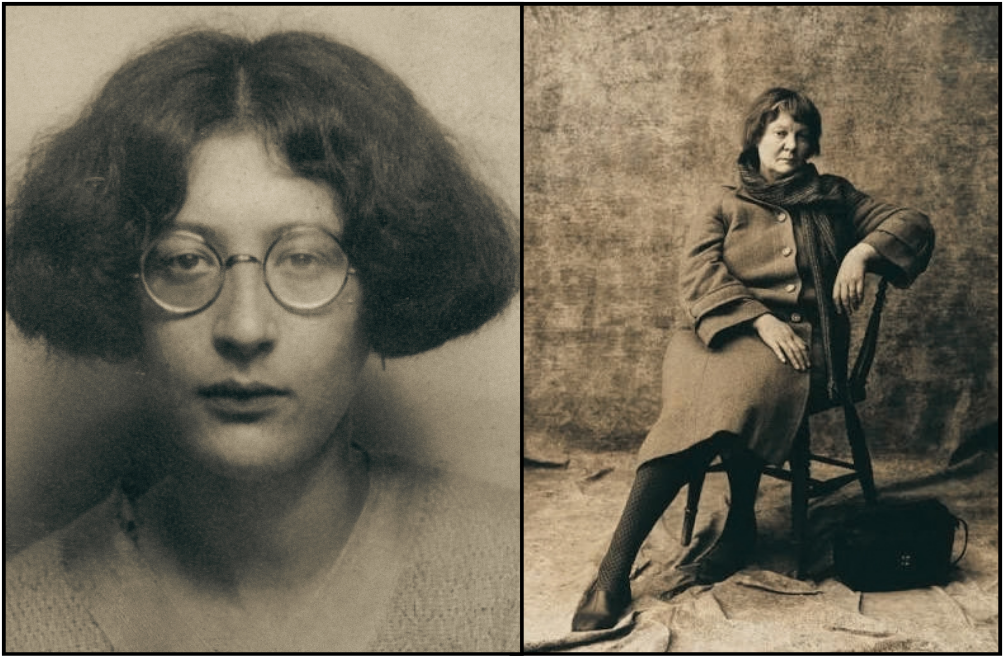
There is an objection that shadows every ethics of character, and it becomes especially pointed when we read Iris Murdoch. Her moral philosophy places attention at the center of the moral life: the slow, patient effort to see other people and the world as they really are, against the distortions of a self-protective ego. Goodness, for Murdoch, is largely a matter of inner vision, and the moral life happens mostly in the quiet spaces between explicit choices.
But most people in the world do not have quiet spaces. They are working, commuting, caring for children and parents, worrying about rent and food and illness. An ethics that asks for patient contemplation seems to presuppose exactly the leisure most human beings lack. And the charge does not stop with Murdoch. It reaches back to the Greeks, whose ethics of virtue was formulated by and for a class of free men supported by the labor of others. If the good life requires an inner life, and an inner life requires time, then the good life belongs to those who can afford it. An ethics of action, by contrast, seems more democratic. Anyone, however burdened, can do the right thing at a given moment, even if only for that moment.
The objection is a serious one. But it lands with very different force on Aristotle and on Murdoch. Pressed to its strongest form, it ends up not as a refutation of an ethics of attention but as a political argument about the conditions under which attention becomes possible.
The Aristocrat’s Ethics
Against Aristotle, the objection hits squarely, and he would hardly have denied it.
The Nicomachean Ethics defines happiness, eudaimonia, as the activity of the soul in accordance with virtue over a complete life. But Aristotle is candid that virtue alone is not enough. Happiness also requires external goods: friends, wealth, political power, good birth, good children, even good looks. A person who is ugly, lowborn, solitary, or childless, he says, is not quite capable of happiness. Fortune matters enormously. Priam of Troy was a virtuous man, but after the catastrophes of his old age no one would call him happy.
Some virtues are simply unavailable to the poor. Magnificence, the virtue of spending large sums fittingly on public works and festivals, belongs only to those with large sums to spend; a poor man who tries to be magnificent is merely foolish. The crowning virtue, megalopsychia, greatness of soul, describes a man who claims great honors because he deserves them, a figure unimaginable without wealth and standing.
The Politics makes the class basis explicit. In the best state, Aristotle argues, citizens should not live the life of craftsmen or traders, because such lives are ignoble and inimical to virtue. Virtue and political participation require scholē, leisure, and leisure requires that others do the work. That means slaves, some of whom Aristotle believed were slaves by nature, along with women, resident foreigners, and manual laborers, all excluded from full citizenship and therefore from the fullest forms of excellence.
None of this is incidental. Aristotle’s ethics is a portrait of human flourishing, and the human being whose flourishing it portrays is a free, propertied, leisured man in a Greek city. Modern Aristotelians have done valuable work in separating the framework from these assumptions, but the separation is a reconstruction. Taken as he wrote it, Aristotle’s ethics is an aristocrat’s ethics.
A Different Kind of Demand
Murdoch is often grouped with the virtue ethicists, but she is a Platonist, not an Aristotelian, and the difference matters here.
The objection assumes that attention is an activity, something one does in addition to the ordinary business of life, like reading novels or visiting galleries, and therefore something that requires spare time. But for Murdoch attention is not primarily an activity at all. It is the quality of one’s perception in whatever one is already doing.
Her central example makes this clear. A mother, M, dislikes her daughter-in-law, D, finding her brash, common, and juvenile. Over time M deliberately looks again, asks herself whether she has been snobbish or possessive, and comes to see D as spontaneous, youthful, and unpretentious. Murdoch stipulates that nothing outward changes; D might even have died or emigrated. The moral work is entirely a matter of re-seeing, and it requires no extra hours. M does it in the midst of her life, not apart from it.
The same is true of attention in the circumstances the objection has in mind. A worker who notices that a colleague is struggling and responds to what that colleague actually needs, a parent who sees past a child’s bad behavior to the fear behind it, a nurse who treats the patient in front of her as a person rather than a case: all are doing exactly what Murdoch means. None of them needs leisure. What they need is the ability to look at another person without the fog of self-interest, irritation, or habit, and that ability is not distributed by class.
Murdoch is explicit on this point. In The Sovereignty of Good she observes that goodness is often found in simple, unreflective people, and she offers the unselfish mother of a large family as an example. Intellect, education, and art can help, but they are aids to goodness, not conditions of it. A learned person can be monstrously egoistic; an uneducated one can see others with perfect clarity.
Her rejection of a human τέλος reinforces the point. Murdoch is not describing a good life in Aristotle’s sense, a completed, flourishing existence that misfortune can ruin. She is describing goodness: a direction of movement, available under any conditions, guaranteeing nothing. No external goods are required, and no outcome is promised to anyone. Her exemplar is not the magnanimous aristocrat but the humble person, the Kierkegaardian tax collector, who sees himself as nothing and so can see everything else as it is. In this her ethics stands closer to the Gospels, where the widow’s two coins outweigh the rich man’s gift, than to the Greek city.
What the Examples Betray
Still, the objection is not baseless, and it would be too easy to dismiss it.
Murdoch’s examples carry an unmistakable social register. She notices the kestrel from her study window. Her model of an ego-humbling discipline is learning Russian. Her models of moral vision are Tolstoy, Shakespeare, and Henry James. The world of The Sovereignty of Good is the world of an Oxford don, and whatever the structure of her argument, its texture suggests a reader with time, books, and a quiet room.
That matters because examples teach. A philosophy illustrated exclusively from comfortable lives will be heard as a philosophy for comfortable people, whatever it claims in principle. More importantly, the examples reveal what Murdoch did not think about. She wrote almost nothing in her moral philosophy about the material conditions of attention: about what labor, poverty, and humiliation do to the capacity to see. On this, her most important source had a great deal to say.
Weil in the Factory
Murdoch took the concept of attention from Simone Weil, and Weil had tested it under conditions Murdoch never faced. In 1934–35, Weil left her post as a philosophy teacher to work as an unskilled laborer in factories in and around Paris, including Alsthom and Renault. Her factory journal is among the most unsparing documents of industrial labor ever written. It records how the pace of the machines, the exhaustion, the piece rates, and the constant small humiliations gradually destroyed her ability to think at all. By the end of a shift she could not reflect; she could barely feel. She wrote that the experience had marked her with the brand of a slave.
From this came her concept of affliction (malheur): suffering so total that it does not merely hurt but crushes the soul, emptying it of the very capacity to attend. Affliction, for Weil, is not a test of character. It is the destruction of the conditions under which character can operate.
Contemporary research points in the same direction from a different angle. Studies of scarcity, most influentially by Sendhil Mullainathan and Eldar Shafir, suggest that financial and time pressure consume mental bandwidth. People under severe constraint are not less intelligent or less moral, but more of their attention is captured by the immediate demands of getting through the day, leaving less for anything else.
Weil thus sharpens the objection more than any of Murdoch’s critics. She confirms its central intuition: there are conditions under which attention becomes nearly impossible. But she also changes its meaning.
From Objection to Indictment
The original objection concluded that an ethics of attention excludes most people from goodness. Weil’s experience suggests a different conclusion. The poor are not less capable of goodness; much evidence, and Murdoch herself, suggests that goodness is common among people with very little. What oppression damages is not goodness but the conditions under which attention can flourish.
Once put this way, the objection turns around. If attention is central to the moral life, then a social order that systematically crushes people’s capacity for it is not merely depriving them of comfort. It is wronging them morally, attacking the very faculty through which they see and love one another. The objection stops being a reason to reject an ethics of attention and becomes a reason to demand a world in which attention is possible for everyone.
Weil drew exactly this conclusion. In The Need for Roots, written in London shortly before her death in 1943, she argued that the human soul has needs as real as the body’s, including the need for work that engages the mind rather than deadening it, and that a just society must be organized to meet them. Murdoch, despite her youthful socialism, never made this move in her moral philosophy. The Sovereignty of Good is nearly silent about social structures, and that silence is its real weakness, more than any supposed elitism in its account of goodness.
There is a further irony. The most famous inversion of Aristotle’s leisure argument comes from Marx. In the third volume of Capital, he describes a realm of freedom that begins only where labor dictated by necessity ends, and he names the shortening of the working day as its basic prerequisite. Aristotle thought leisure was the precondition of virtue and concluded that virtue must belong to the few. Marx accepts the premise and rejects the conclusion: if leisure is the precondition of a fully human life, then everyone must have it. Read alongside Weil, Murdoch’s ethics points in the same direction. If attention is the heart of goodness, then the conditions of attention are a matter of justice.
The Egalitarian Rival
What about the claim that an ethics of action is more democratic? There is something to it, but the strongest version of the claim belongs to Kant rather than to action-based ethics in general.
Kant held that the only thing good without qualification is a good will, and that a good will is available to anyone, regardless of intelligence, education, wealth, or fortune. It shines like a jewel, he wrote, even if circumstances prevent it from accomplishing anything at all. He credited Rousseau with curing him of his scholar’s contempt for ordinary people and teaching him to honor human beings as such. Of all the major moral traditions, Kant’s is the most deliberately egalitarian about moral worth.
But an ethics of action has its own presuppositions. Acting well requires room to act, and the people the objection worries about often have the narrowest room of all. The worker on the line, the migrant without papers, the parent working three jobs: their choices are constrained before deliberation begins. An ethics that locates morality in choice risks locating it precisely where the poor have least.
Murdoch’s deeper reply is that action follows from vision. We can only choose within the world we can see. Someone who perceives others accurately will act better in whatever narrow range of choices life allows, while someone who sees only through the fog of self will act badly however wide their options. If this is right, attention is not a luxury added to action but its precondition, and an ethics of attention may be available even where action is most constrained.
Toward a Politics of Attention
So the aristocracy charge deserves three different verdicts. Against Aristotle, it is decisive: his ethics was built for a leisured class and says so. Against Murdoch’s examples and her political silence, it is fair: she wrote as though the conditions of attention could be taken for granted, and for most of humanity they cannot. Against the core of her account of goodness, it largely fails. Hers is among the least elitist conceptions of goodness in the philosophical tradition: it requires no wealth, no learning, no leisure, only the willingness to look honestly at what is not oneself.
What the objection ultimately reveals is not a flaw in the idea of attention but an absence beside it. An ethics of attention needs a politics of attention: an account of the material and social conditions that allow people to see one another clearly, and a commitment to securing those conditions for everyone. Weil supplied the beginnings of one. Murdoch did not. The work of joining her moral vision to a just economy remains to be done.
Sources: Aristotle, Nicomachean Ethics (Books I and IV) and Politics (Books VII–VIII); Iris Murdoch, The Sovereignty of Good (1970); Simone Weil, La Condition ouvrière (1951) and The Need for Roots (1949); Karl Marx, Capital, vol. 3; Immanuel Kant, Groundwork of the Metaphysics of Morals (1785); Sendhil Mullainathan and Eldar Shafir, Scarcity: Why Having Too Little Means So Much (2013).