The Navel of the Ancient World
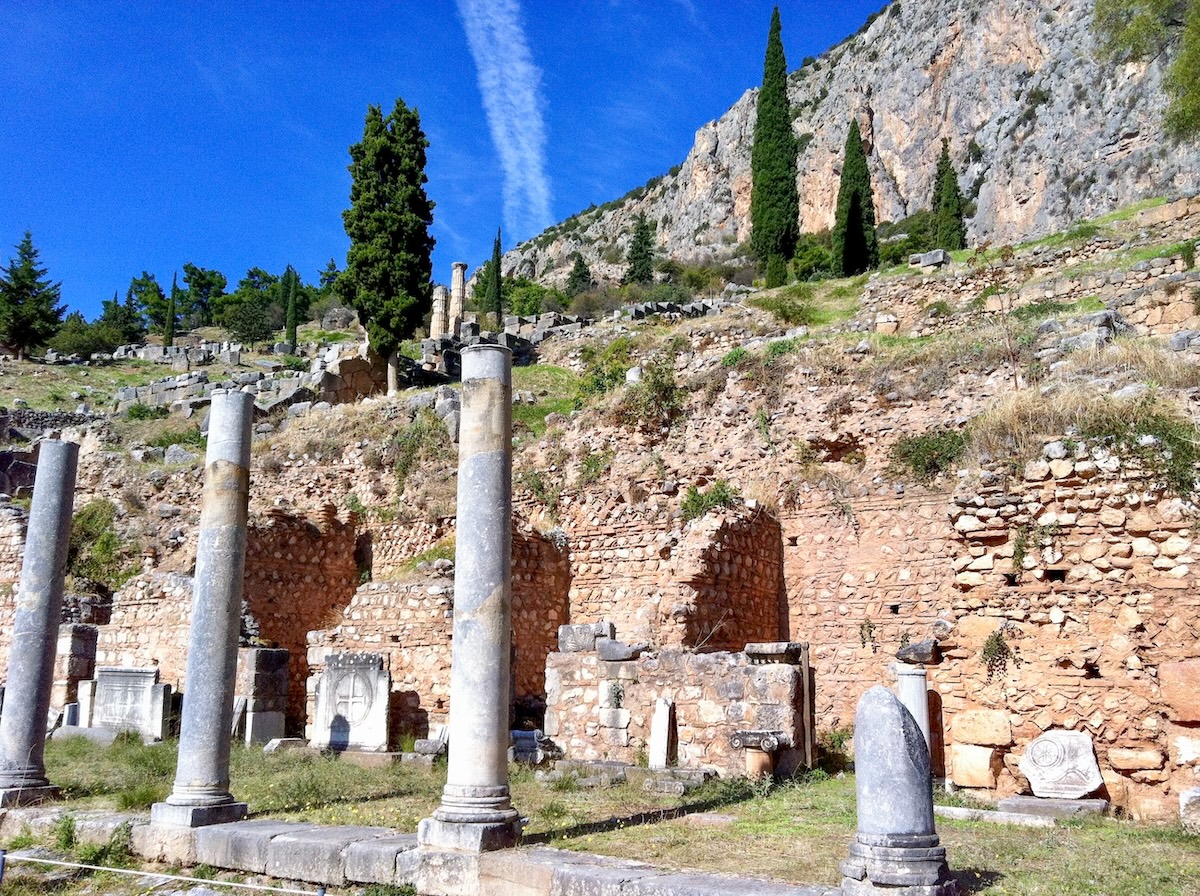
Perched dramatically on the slopes of Mount Parnassus, overlooking the stark beauty of the Pleistos Valley, lies Delphi. To the ancient Greeks, this was not merely a city-state or a scenic viewpoint; it was the Omphalos—the literal navel of the earth. According to myth, Zeus released two eagles from opposite ends of the universe, and they crossed paths precisely here.
For centuries, Delphi served as the spiritual heart of the Greek world. It was a panhellenic sanctuary dedicated to Apollo, the god of light, music, and prophecy. Delegates, emperors, and commoners alike braved the treacherous mountain terrain to seek counsel from the Pythia, the high priestess who channeled Apollo’s wisdom. Her cryptic prophecies, delivered while suspended over a fissure emitting intoxicating vapors, altered the trajectories of wars, colonies, and empires.
Walking Among the Ruins
Today, the ruins of Delphi form one of the most evocative archaeological sites in the world. The physical layout of the sanctuary reflects the journey an ancient pilgrim would take, winding upward along the Sacred Way.
The surviving architecture offers a vivid glimpse into Delphi’s dual role as a religious epicenter and a competitive arena:
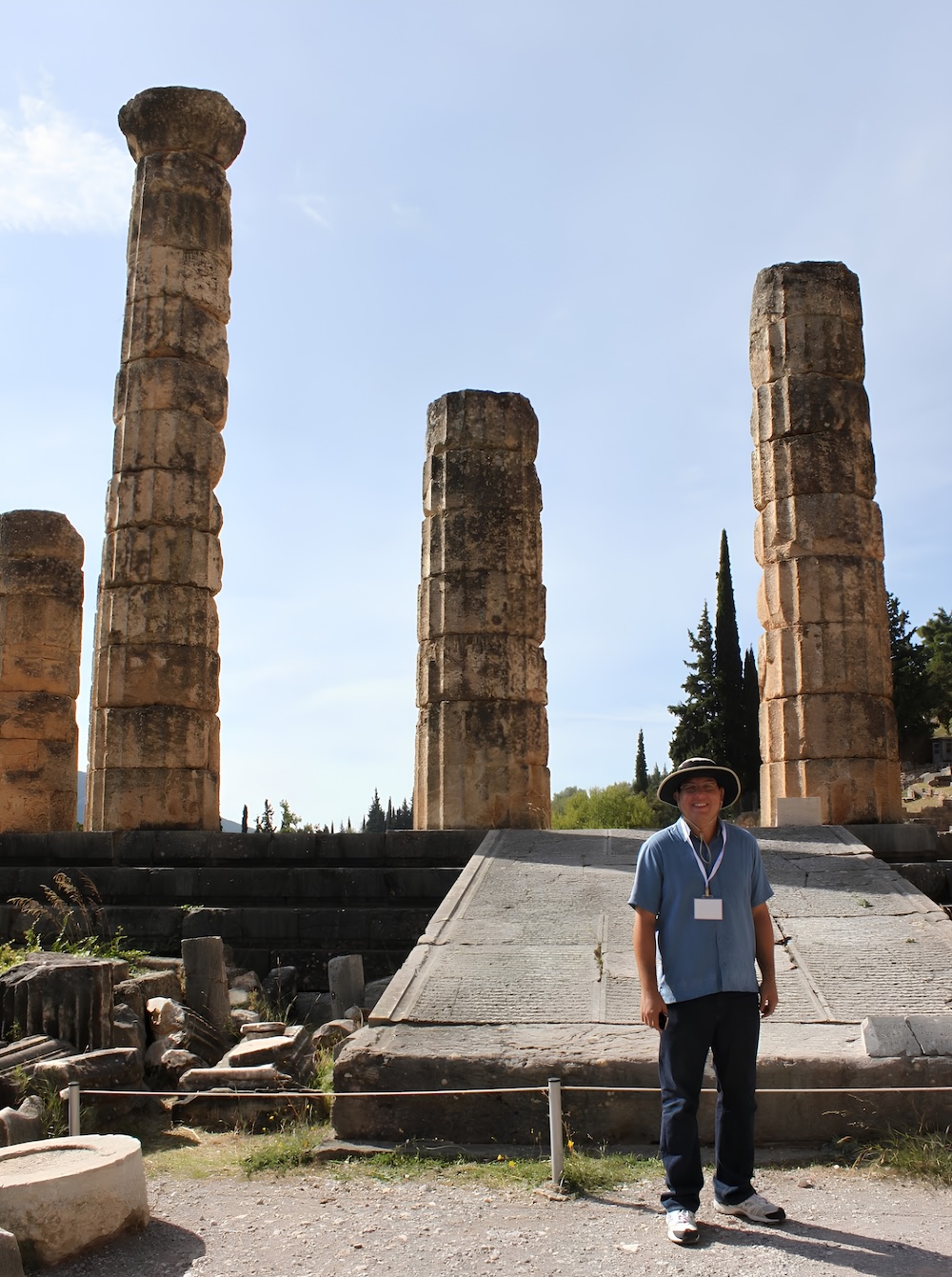
- The Temple of Apollo: The Temple of Apollo was the religious heart of the sanctuary. While only a handful of Doric columns remain standing today, this terrace once housed the inner sanctum (adyton) where the Oracle spoke. Inscribed on its walls were the foundational tenets of Greek philosophy, including “Know thyself” and “Nothing in excess.”
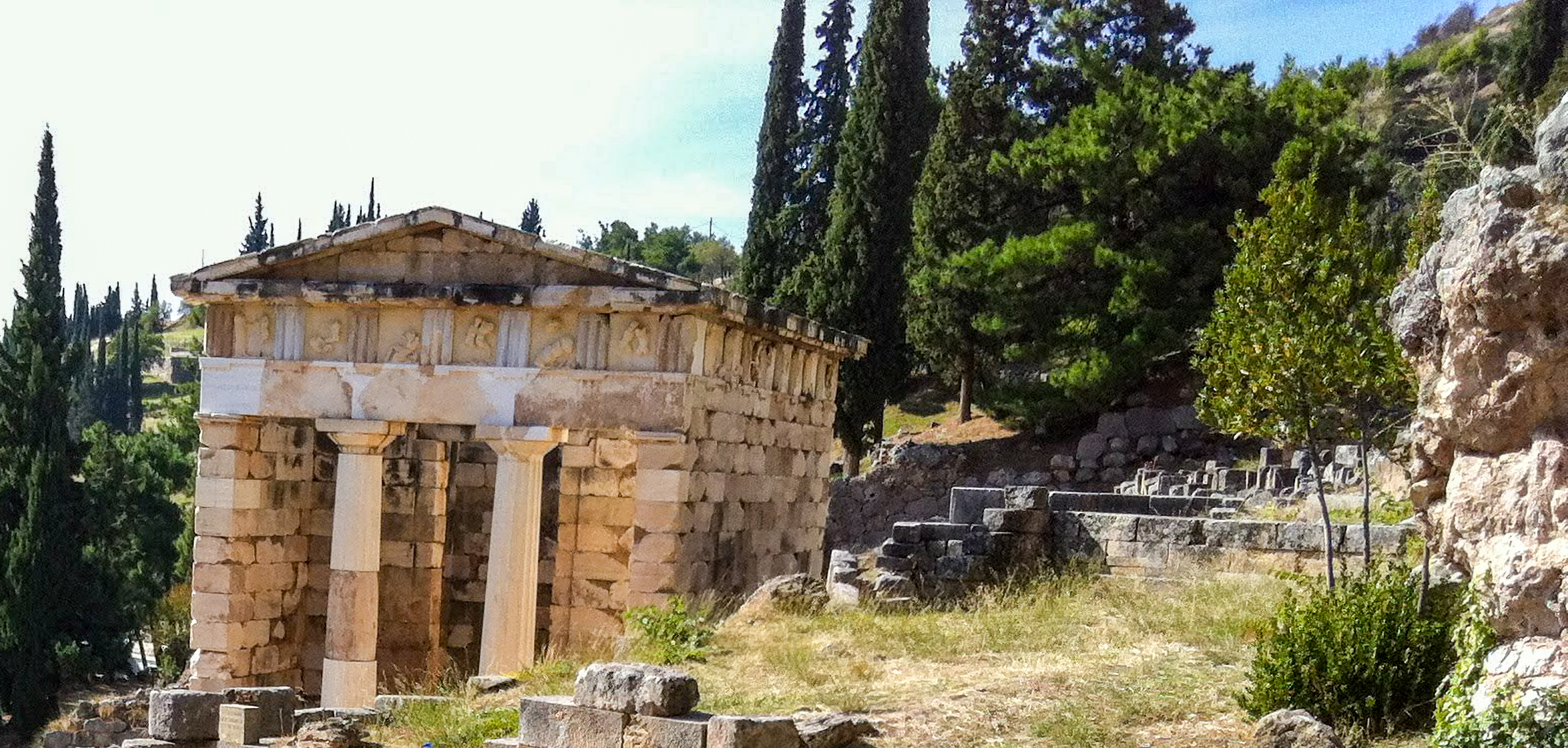
- The Treasury of the Athenians: Built to commemorate the Athenian victory at the Battle of Marathon, this finely restored marble structure housed the wealthy votive offerings and trophies dedicated to Apollo. It stands as a testament to how city-states used Delphi to project political power.
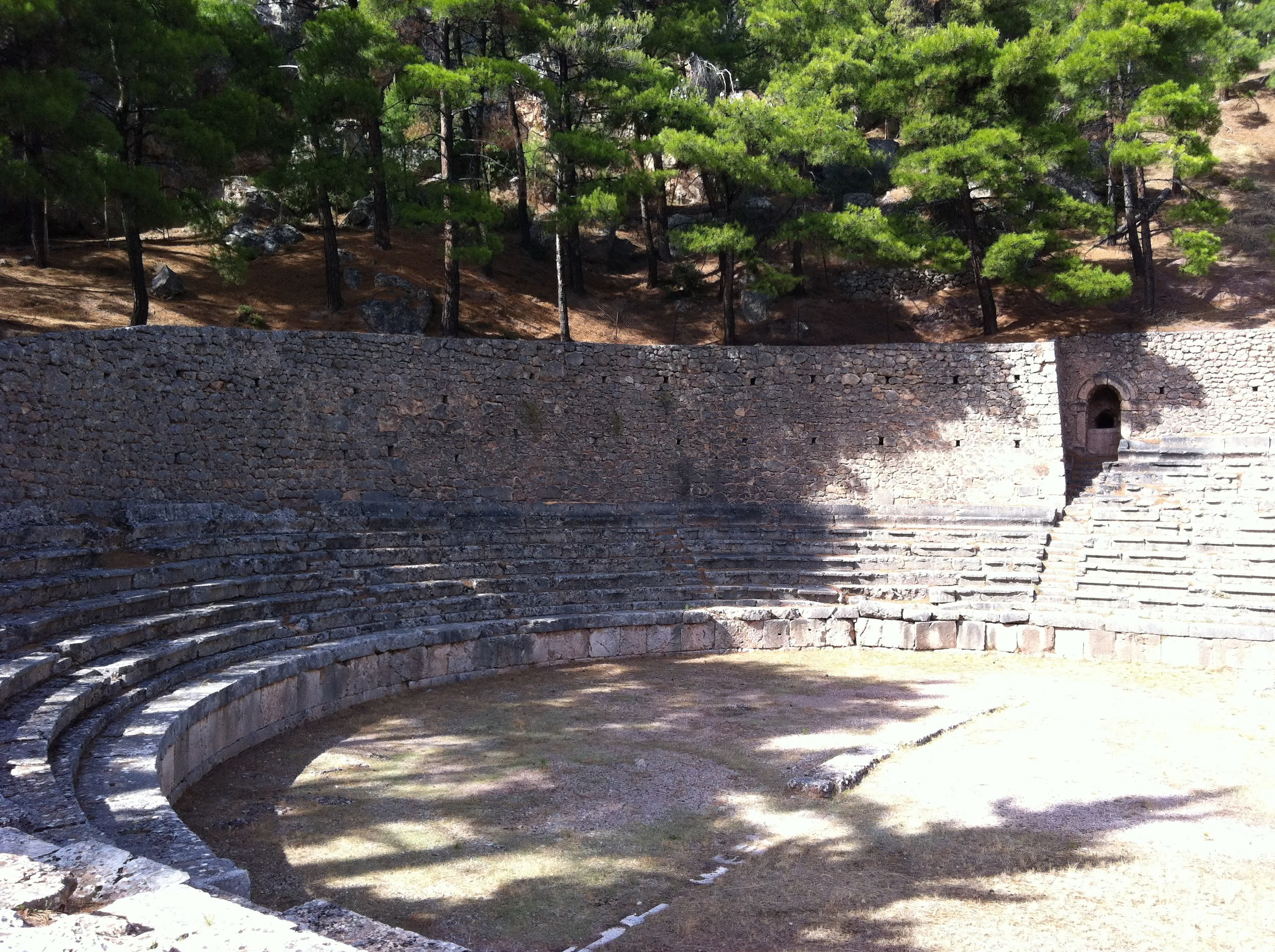
- The Theater: Higher up the slope sits a magnificent 5,000-seat theater offering panoramic views of the valley. It served as the venue for the musical and dramatic contests of the Pythian Games, a precursor to the modern Olympics that celebrated artistic achievement alongside athletic excellence.
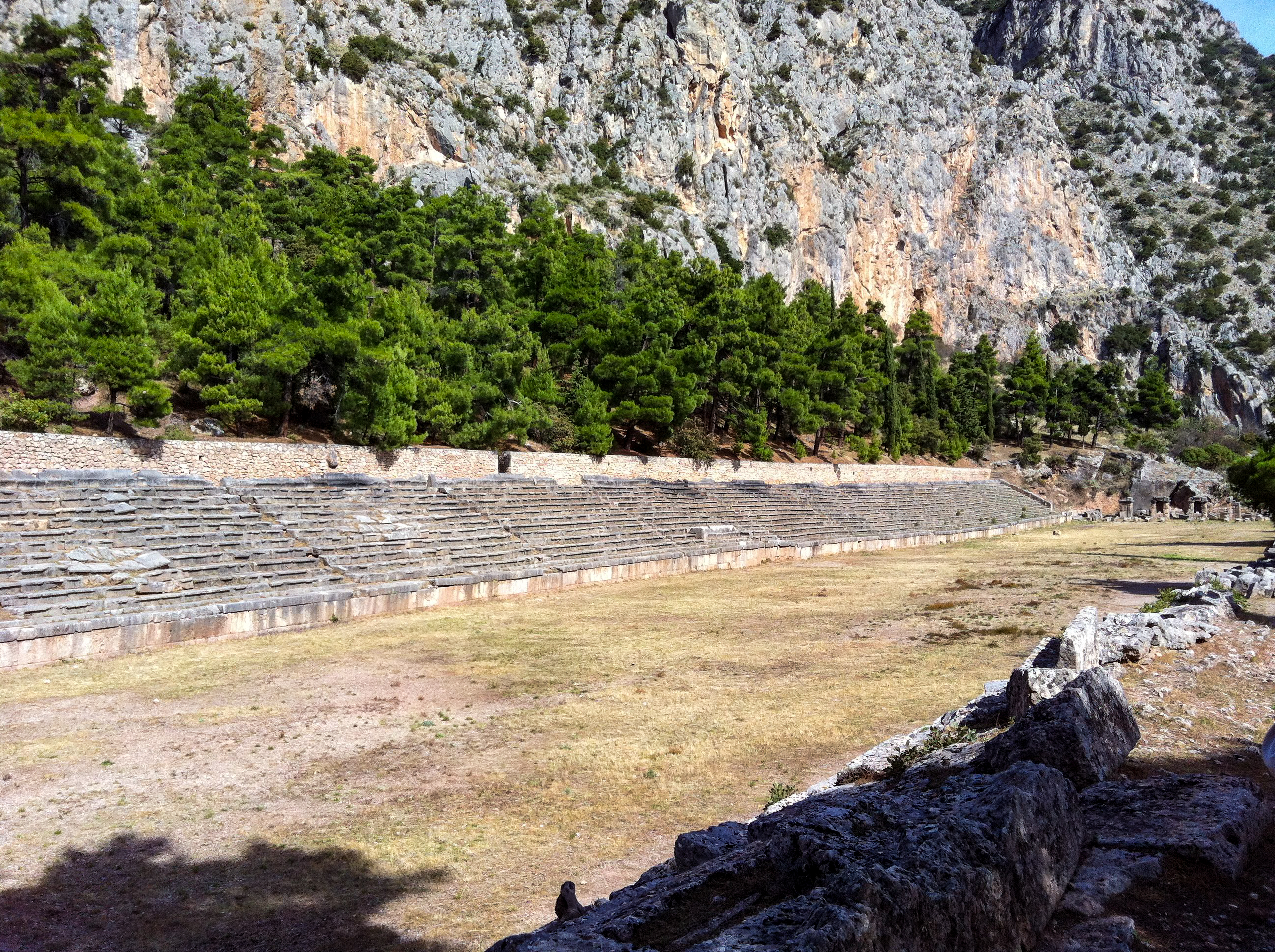
- The Stadium: Located even further up the mountain slope lies the stadium, one of the best-preserved in Greece. It hosted the athletic competitions of the Pythian Games, showcasing the physical strength and endurance of competitors from across the Greek world.
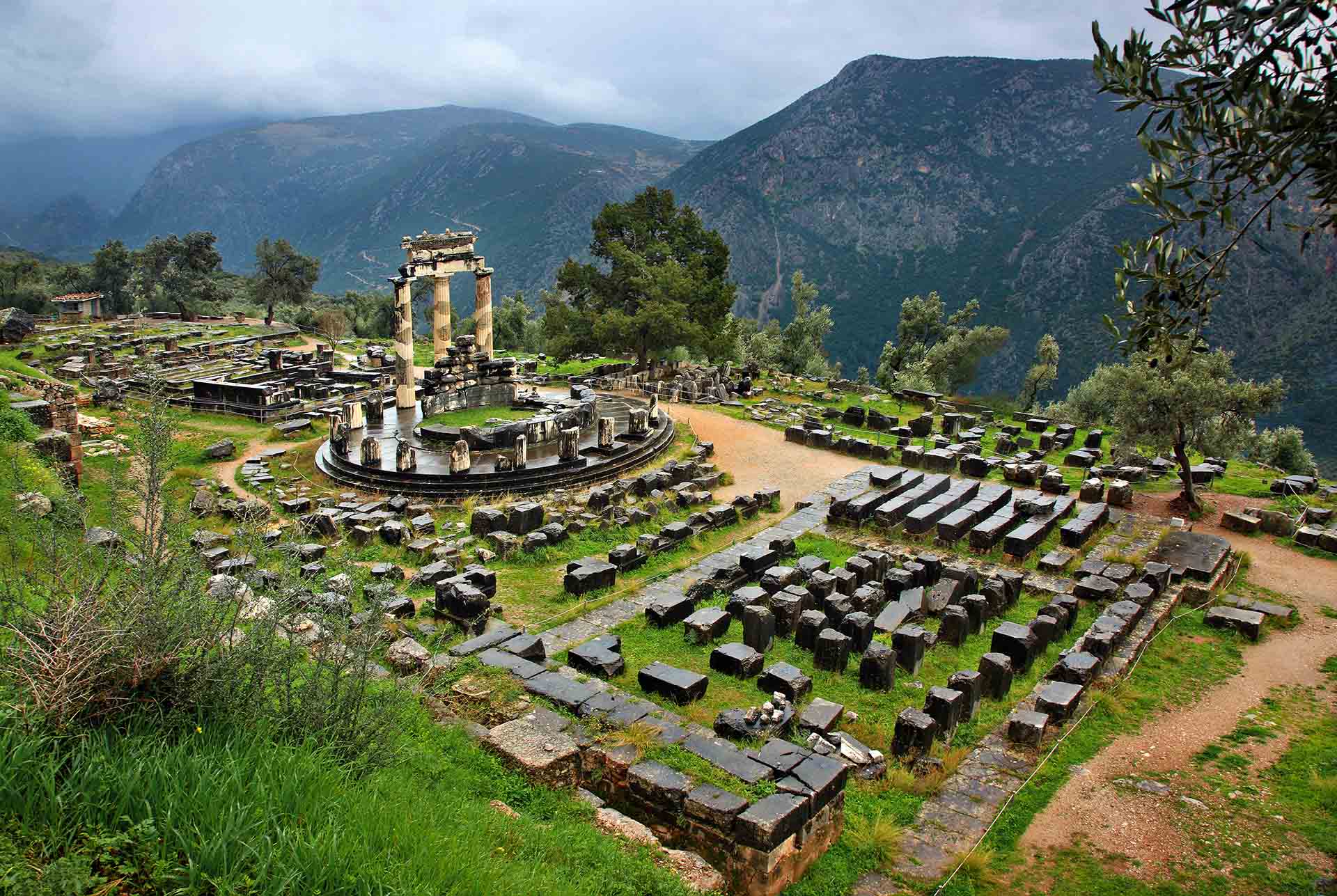
- The Tholos at the Sanctuary of Athena Pronaia: Situated slightly apart from the main complex, this iconic circular structure is a masterpiece of classical architecture. Though its exact function remains a mystery, its three re-erected Doric columns against the mountain backdrop form the quintessential image of Delphi.
A Legacy Cast in Stone
Delphi’s influence eventually waned with the rise of Christianity, and the sanctuary was officially closed by the Roman Emperor Theodosius in 394 AD. Over centuries, mudslides and earthquakes buried the site, preserving it until French archaeologists began excavation in the late 19th century.
What remains of Delphi today is more than just a collection of tumbled marble and broken columns. It is a monument to the human desire for certainty in an uncertain world. Shrouded in mountain mist and framed by soaring cliffs, the ruins still possess a quiet, haunting majesty that commands the same reverence from modern travelers as it did from the ancients millennia ago.