A World at the Crossroads of Transformation
Few dates in the deep human past carry the weight of 6000 BC. Standing at the threshold between the seventh and sixth millennia before the common era, this moment represents not a single event but a convergence of transformations — climatic, agricultural, social, and cultural — that reshaped human life across continents. From the river valleys of the Near East to the islands of the Caribbean, from the Anatolian plateau to the plains of the Balkans, the world of 6000 BC was a world in motion. Understanding its significance means grasping how the foundations of everything we recognize as civilization were quietly, unevenly, and irreversibly being laid.
A Planet Reconfiguring Itself
To understand 6000 BC, one must first appreciate the environmental stage upon which human drama unfolded. The last great Ice Age had ended thousands of years earlier, but the Holocene epoch — our current geological age — was itself still settling into new configurations. Climates were warmer and wetter across much of the Old World, rivers ran fuller, and the fertile crescent of the Near East was a mosaic of grasslands and forests far more generous than the landscapes that exist there today.
This climatic generosity created conditions that both enabled and pressured human communities. Steven Mithen, in After the Ice: A Global Human History, 20,000–5000 BC, traces the long arc of human adaptation from the frigid millennia of glacial advance through the explosive diversification of the Holocene, showing how warming temperatures opened ecological niches that populations quickly filled. By the time the world arrived at 6000 BC, the consequences of that filling — denser populations, more complex settlements, increasing reliance on cultivated plants and herded animals — were creating new pressures of their own.
The volume 6000 BC: Transformation and Change in the Near East and Europe, edited by Peter F. Biehl and Eva Rosenstock, directly confronts this moment of convergence. Its contributors emphasize that around 6000 BC, “the seventh to sixth millennium BC transition represents one of the most dynamic periods in the prehistory of the Near East and Europe,” marked by the spread of farming economies, shifts in settlement patterns, and measurable changes in material culture across a vast geography. The book positions this date not as an arbitrary chronological marker but as a genuine hinge point — a period when trajectories established over prior centuries crystallized into new and lasting forms.
The Agricultural Revolution in Full Stride
Perhaps nothing defines 6000 BC more than the state of the Neolithic agricultural revolution. Agriculture had not been invented at this date — that process had begun millennia earlier in the Fertile Crescent, in parts of China, and independently elsewhere. But by 6000 BC, farming was spreading, consolidating, and transforming societies in ways that had not yet been felt in earlier centuries.
James C. Scott, in Against the Grain: A Deep History of the Earliest States, offers a corrective to triumphalist narratives of agricultural progress. He argues that early farming was fragile, labor-intensive, and not obviously superior to foraging for those who practiced it. The adoption of agriculture was partial, contested, and often reversible. Yet by 6000 BC, in the Near East and southeastern Europe at least, mixed farming economies — combining cereal cultivation with animal husbandry — had become sufficiently productive and widespread to support villages of hundreds of inhabitants. The consequences were profound: sedentism created new relationships to land, labor, and one another. Stored grain created inequalities of ownership. Fixed communities created the preconditions for everything from inheritance law to monumental architecture.
The reach of these developments was not confined to the Old World. Basil Reid’s The Archaeology of Caribbean and Circum-Caribbean Farmers (6000 BC – AD 1500) situates 6000 BC as the opening moment of a long story of agricultural transition in the Americas, examining how early domestication and farming practices took root in the circum-Caribbean region. Reid’s work reminds us that 6000 BC is not merely a Near Eastern or European story: across the Atlantic, human communities were engaged in their own negotiations with plants, animals, and the land, following trajectories that would eventually produce the sophisticated agricultural civilizations of Mesoamerica and the Andes.
David Graeber and David Wengrow, in The Dawn of Everything: A New History of Humanity, push back against the idea that agriculture inevitably produced hierarchy and the state. Drawing on a vast body of archaeological and anthropological evidence, they demonstrate that early farming communities experimented with a remarkable range of social arrangements — some egalitarian, some hierarchical, some that deliberately resisted the concentration of power. By 6000 BC, the diversity of human social organization was still very much alive. The world had not yet committed to any single path.
The Neolithic Near East and the Settlements of Anatolia
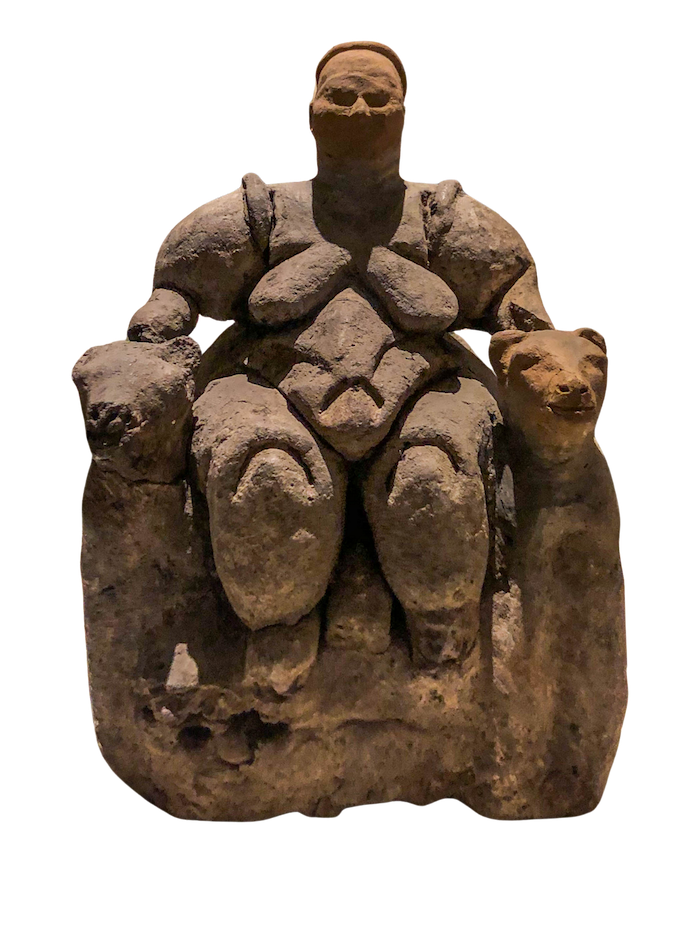
Nowhere is the significance of 6000 BC more visible than in the archaeological record of Anatolia and the broader Near East. The great site of Çatalhöyük, in central Anatolia, was by this period reaching the later phases of its occupation — a densely packed proto-urban settlement of mud-brick houses where the dead were buried beneath the floors and the walls were adorned with elaborate paintings of hunts, animals, and geometric designs. Bleda S. Düring’s study Çatalhöyük East and Kösk Höyük: A Grand Connection? examines the social dynamics of such Neolithic communities, asking how kinship, ritual, and shared symbolic life held together communities that were simultaneously crowded and egalitarian — or at least, that lacked the obvious markers of top-down authority that later Near Eastern cities would display.
Düring’s analysis underscores that the people of 6000 BC were not primitive ancestors shuffling toward civilization. They were sophisticated social actors who had developed intricate systems for managing collective life, allocating labor, and making meaning in the world. Their material culture — the ceramics, figurines, obsidian blades, and woven textiles that survive in archaeological contexts — reflects levels of craft specialization and aesthetic ambition that belie any simple equation of “prehistoric” with “simple.”
Further to the east and south, in western Syria, the evidence grows more detailed still. The site of Shir, examined in The Late Neolithic Site of Shir in Western Syria: The Final Phase of Occupation circa 6000 BC, provides a window into a community navigating the very end of one phase and the beginning of another. The final occupation layers at Shir, dated precisely to the turn from the seventh to the sixth millennium, document a settlement undergoing significant change: shifts in architecture, ceramic tradition, and perhaps in the social relations that organized production and exchange. What Shir reveals is that 6000 BC was not a moment of stable plateau but of active transformation — communities were not simply continuing what they had always done, but responding, adapting, and innovating in the face of new pressures and possibilities.
The Spread of Ideas and People
One of the most important dimensions of 6000 BC is movement — of people, of ideas, and of the material goods that carried both. The Neolithic transition, as it spread from the Near East into southeastern Europe and along the Mediterranean coast, was not simply a matter of local communities independently adopting farming. It involved the actual migration of farming populations, the exchange of domestic plants and animals, and the transmission of ceramic traditions, architectural styles, and ritual practices across vast distances.
David W. Anthony’s The Horse, the Wheel, and Language charts how, over the subsequent millennia, the spread of Indo-European languages would transform Eurasia’s cultural landscape — but the preconditions for that spread were being established in the world of 6000 BC, as Neolithic farmers filled in the ecological and demographic geography that later pastoral and proto-urban cultures would inherit. By 6000 BC, the Balkans were already home to settled farming villages with sophisticated painted pottery. The Danube corridor was becoming a highway of cultural exchange connecting the Near East to central and northern Europe.
Nicholas Wade, in Before the Dawn, explores how genetics and archaeology together illuminate these ancient population movements. The DNA of modern Europeans carries clear signals of the Neolithic migrations that brought farming populations from Anatolia into a continent previously inhabited by Mesolithic hunter-gatherers. The world of 6000 BC was one of encounters — not always peaceful, and not always permanent, but consequential. The mixing of populations, the borrowing of technologies, and the collision of lifeways that characterized this era left genetic and cultural traces that persist to the present.
Inequality, Hierarchy, and the First Experiments in Social Power
The world of 6000 BC was not yet a world of kings and cities. That transformation would come later — most dramatically in Mesopotamia and Egypt in the fourth and third millennia BC, when writing, monumental architecture, and institutionalized political authority emerged in close conjunction. But the seeds of those developments were being planted in the sixth millennium, and archaeologists have found their traces in the Neolithic record.
Kent Flannery and Joyce Marcus, in The Creation of Inequality, trace the emergence of social hierarchies through the archaeological record of prehistoric societies worldwide. They argue that by 6000 BC, many Neolithic communities were already experimenting with forms of rank and prestige — not yet the rigid, hereditary class structures of later civilizations, but systems in which certain individuals or lineages claimed higher status through ritual authority, control of valued goods, or demonstrated achievements in farming, hunting, or warfare. These experiments were consequential: they established cultural templates and social expectations that subsequent generations would inherit and intensify.
Graeber and Wengrow, characteristically, complicate this picture. They point to abundant evidence that many prehistoric communities were not simply proto-hierarchical societies waiting to become states, but sophisticated political actors who sometimes chose egalitarianism, sometimes dismantled emerging hierarchies, and sometimes lived in ways that defy easy categorization. The world of 6000 BC, they suggest, was characterized by what they call “political self-consciousness” — an awareness among human communities of the different social arrangements available to them, and a capacity to choose among them. The narrowing of those choices, the funneling of human social possibility into the state form, was not inevitable in 6000 BC. It lay still in the future.
Art, Mind, and the Interior Life of Neolithic People
One temptation in writing about 6000 BC is to treat its inhabitants as mere precursors — interesting insofar as they set the stage for what came later, but not fully realized human beings in their own right. The archaeological record resists this condescension. The people of 6000 BC painted their walls, buried their dead with care, made music, and arranged their communities according to values and aesthetics that we can sometimes glimpse through the material they left behind.
David Lewis-Williams, in The Mind in the Cave: Consciousness and the Origins of Art, explores the deep cognitive roots of human artistic expression, tracing them back through the cave paintings of the Upper Paleolithic. By 6000 BC, art had moved from the cave wall to the ceramic surface and the plastered interior of the house. The painted pottery of the Neolithic Balkans — with its spirals, chevrons, and human and animal figures — represents a sophisticated tradition of visual communication, one that encoded meanings we can only partially decode. These were not decorations applied thoughtlessly; they were statements about identity, cosmology, and relationship, made by people who cared deeply about how the world looked and what it meant.
Rebecca Wragg Sykes, writing in Kindred about the Neanderthals who had preceded anatomically modern humans by hundreds of thousands of years, provides a useful counterpoint: she demonstrates that the capacity for rich interior life, for symbolic thought, and for aesthetic response is ancient, predating our own species. By 6000 BC, Homo sapiens had been practicing art, ritual, and symbolic communication for tens of thousands of years. The Neolithic world did not invent interiority; it gave it new forms, new media, and new social contexts.
The Significance of the Threshold
Why, then, does 6000 BC matter? It matters because it represents a threshold — not a sharp line, but a zone of transition — in which the human story crossed from one mode of being to another. Before this era, the dominant pattern of human life across much of the world was mobile or semi-mobile subsistence, organized in small bands or loose tribal networks, with low population densities and minimal permanent infrastructure. After this era — not immediately, but in the centuries and millennia that followed — the dominant pattern in more and more regions would be settled agriculture, dense population, social hierarchy, institutionalized religion, and eventually the state.
6000 BC sits at the center of that transition. The Near East and southeastern Europe were already well advanced into the Neolithic world; the Caribbean was beginning its own agricultural revolution; northern and western Europe still lay largely in the domain of Mesolithic foragers who would not encounter farming for another thousand years or more. The world of 6000 BC was therefore not a uniform moment but a mosaic — a global patchwork of communities at different stages of the same broad transformation, connected by the shared human experience of negotiating new relationships with food, land, community, and power.
What makes this moment uniquely legible to us, as Biehl and Rosenstock’s volume demonstrates through its assemblage of international scholarship, is the richness of the archaeological record. The ceramics, the house plans, the burial goods, the animal bones and carbonized seeds — all of these speak to a world not silent and opaque but actively communicating across time. The people of 6000 BC left us, in their material culture, something of their lives, their priorities, and their experiments in being human.
Conclusion
The year 6000 BC is significant not because it was a moment of sudden rupture — no battle was fought, no empire fell, no single invention transformed the world overnight. It is significant because it captures human life at a moment of profound, slow-moving, continent-spanning change: the consolidation of agriculture, the elaboration of social complexity, the spread of farming peoples and ideas across Eurasia and into the Americas, and the earliest experiments in hierarchy, art, and urban living that would eventually produce the civilizations we call ancient. It is the moment, in a very real sense, before history — but it is the moment from which history grew.
To stand mentally at 6000 BC is to see the human story at a point of maximum potential: the paths not yet taken, the social experiments not yet foreclosed, the diversity of human life still vivid and unresolved. It is, as Graeber and Wengrow might say, a moment of genuine freedom — before the walls of the state had risen high enough to obscure the horizon. Understanding it is essential to understanding ourselves.
Bibliography
Anthony, David W. The Horse, the Wheel, and Language: How Bronze-Age Riders from the Eurasian Steppes Shaped the Modern World. Princeton: Princeton University Press, 2007.
Biehl, Peter F., and Eva Rosenstock, eds. 6000 BC: Transformation and Change in the Near East and Europe. Berlin: Freie Universität Berlin, 2008.
Düring, Bleda S. “Çatalhöyük East and Kösk Höyük: A Grand Connection?” In Neolithic Studies in Anatolia and the Near East, edited by various. Istanbul, 2010.
Flannery, Kent, and Joyce Marcus. The Creation of Inequality: How Our Prehistoric Ancestors Set the Stage for Monarchy, Slavery, and Empire. Cambridge, MA: Harvard University Press, 2012.
Graeber, David, and David Wengrow. The Dawn of Everything: A New History of Humanity. New York: Farrar, Straus and Giroux, 2021.
Lewis-Williams, David. The Mind in the Cave: Consciousness and the Origins of Art. London: Thames and Hudson, 2002.
Mithen, Steven. After the Ice: A Global Human History, 20,000–5000 BC. Cambridge, MA: Harvard University Press, 2004.
Reid, Basil. The Archaeology of Caribbean and Circum-Caribbean Farmers (6000 BC – AD 1500). London: Routledge, 2018.
The Late Neolithic Site of Shir in Western Syria: The Final Phase of Occupation circa 6000 BC. Archaeological report. Excavation project publication, 2010s.
Scott, James C. Against the Grain: A Deep History of the Earliest States. New Haven: Yale University Press, 2017.
Wade, Nicholas. Before the Dawn: Recovering the Lost History of Our Ancestors. New York: Penguin Press, 2006.
Wragg Sykes, Rebecca. Kindred: Neanderthal Life, Love, Death and Art. London: Bloomsbury Publishing, 2020.